
Views: 0 Author: Site Editor Publish Time: 2026-10-19 Origin: Site


For film and tape manufacturers, choosing the correct coating technology is a critical engineering decision. It directly dictates product quality, line speed, and long-term operational costs. Global industries now demand highly specialized products, ranging from high-tack double-sided tapes to advanced multi-layer barrier films. Therefore, understanding the exact technical limits of your factory floor machinery is absolutely vital.
Both hot melt and extrusion methods apply a melted layer onto a moving web. However, their fluid dynamics, material compatibilities, and end-use applications diverge sharply. Forcing one technology into an application built for the other leads to poor product integrity. It also causes massive material waste and inflated manufacturing costs. This guide breaks down the core mechanical differences. It gives plant managers and procurement teams the data needed to invest in the exact technology their production roadmap requires.
Process Difference: Hot melt processes utilize pre-formulated thermoplastic adhesives applied onto substrates. Engineers specify this primarily for tapes, labels, and specialty laminations. Conversely, extrusion melts raw solid polymer resins to create a distinct structural film layer directly on a moving web, serving mainly the packaging and barrier sectors.
Equipment Focus: Hot melt systems deliver high precision, lower-temperature applications, and rapid product changeovers. In contrast, extrusion setups are massive, highly complex systems built for continuous, high-speed, and large-scale commodity production.
Material Compatibility: Hot melt systems excel with temperature-sensitive substrates using ethylene-vinyl acetate, polyurethane, and rubber-based adhesives. Extrusion systems are optimized for the high-temperature melting of standard polymers like polyethylene and polypropylene.
Investment and Returns: Extrusion lines demand a significantly higher initial capital expenditure but yield lower per-unit costs during high-volume runs. Hot melt setups require lower initial capital and provide operational agility for diverse, high-margin custom runs.
Hot melt coating is a specialized manufacturing process. It heats solid thermoplastic adhesives to a molten state and applies them precisely to a moving substrate. The base web can be standard paper, aluminum foil, delicate plastic films, or breathable non-woven fabrics. These engineered adhesives contain zero solvents. This completely eliminates the need for massive, energy-hungry drying tunnels. Consequently, the entire line becomes highly space-efficient and easily meets strict environmental regulations.
On the factory floor, the mechanics rely entirely on precise thermal zones and fluid dynamics. Operators introduce solid adhesive blocks or pellets into a heated tank. The system raises the temperature—usually between 120 degrees and 180 degrees Celsius—to achieve the exact pumping viscosity. Heated hoses then push this molten fluid directly to the application head.
Modern facilities rely heavily on slot die technology. A high-performance hot melt coating machine meticulously calibrates the die gap to extrude a perfectly uniform adhesive sheet. Once applied, the web immediately contacts a chilled roller. This rapid thermal drop freezes the adhesive in milliseconds. It prevents bleed-through on porous materials just before the web reaches the rewinder.
Adhesive formulation dictates ultimate performance. Thermoplastic polyurethane works beautifully for washable textiles. Ethylene-vinyl acetate handles general bonding. Pressure-sensitive adhesives dominate products requiring permanent tack. This makes the technology the absolute gold standard for double-sided tapes, medical dressings, and automotive interior panels.
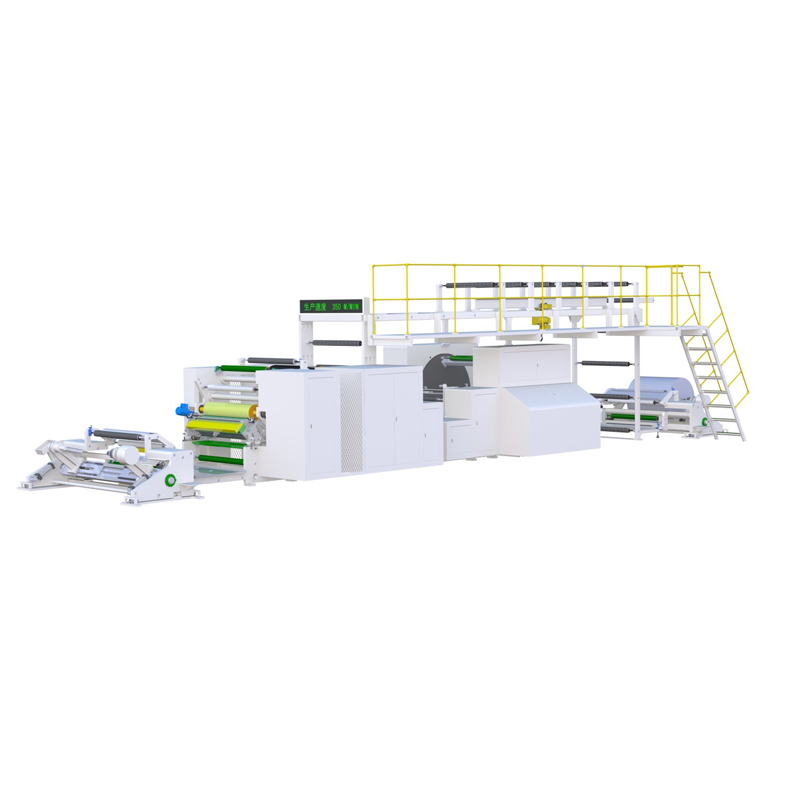
Extrusion coating is a heavily engineered, high-temperature operation. It applies a continuous layer of molten polymer directly onto a solid web. Hot melt systems apply a pre-formulated glue. Extrusion, on the other hand, essentially manufactures a brand-new plastic film in real time. It instantly bonds this new film to the underlying material. This process forms the foundation of multi-layered composites needed for moisture or gas barriers.
The reality of extrusion involves intense heat, immense pressure, and blistering line speeds. A hopper feeds solid polymer resin pellets into a heavy-duty heated barrel. Inside, a rotating Archimedes screw generates massive mechanical shear. This friction, paired with thermal heaters, melts the polymer into a highly viscous fluid.
The system forces this melt under extreme pressure through a flat T-die. A wide curtain of liquid plastic drops downward to the nip point. Here, the molten polymer meets the moving substrate. A rubber pressure roller and a massive water-cooled steel chill roll violently compress the materials together. This forces the liquid plastic deep into the substrate fibers. The chill roll instantly solidifies the film, creating an unbreakable mechanical bond.
Because this relies on raw thermoplastic resins, standard materials include low-density polyethylene, polypropylene, and polyethylene terephthalate. These commodity plastics make the process indispensable for high-volume flexible packaging and heavy-duty composites. For instance, facilities often deploy a dedicated extrusion coating line to manufacture robust roofing waterproof membranes. Such setups demand exceptionally thick, weather-resistant polymer layers extruded at massive capacities.
The global coating sector is currently undergoing a massive transformation driven by sustainability and efficiency mandates. In the packaging realm, engineers are increasingly tasked with processing biodegradable polymers and compostable resins like polylactic acid. These eco-friendly materials have notoriously narrow processing windows. They require highly sensitive temperature profiles to prevent thermal degradation inside the extruder barrel. Facilities must upgrade their thermal control software to handle these sensitive bioplastics without sacrificing line speed.
Simultaneously, the tape and label sector sees a massive surge in UV-curable acrylic adhesives. These advanced formulations deliver the high-temperature shear resistance previously reserved for toxic solvent-based glues. Yet, they maintain the zero-emissions advantage of traditional hot melt. Furthermore, supply chain pressures force manufacturers to seek equipment offering rapid changeovers. High-speed automation and precise tension control are no longer optional upgrades; they are baseline requirements to maintain profitable margins in a hyper-competitive landscape.
While both technologies apply molten material to a web, their engineering principles and end-use capabilities differ drastically. Plant managers must evaluate these core differences to align machinery investments with their strategic product roadmaps.
Feature / Parameter | Hot Melt Coating | Extrusion Coating |
|---|---|---|
Primary Material | Formulated thermoplastic adhesives | Raw solid polymer resins |
Operating Temperature | Moderate 120 to 180 Degrees Celsius | Very High 250 to 330+ Degrees Celsius |
Coating Thickness | Very thin, highly precise | Thicker, acts as a structural layer |
Bonding Mechanism | Chemical formulation and surface tackiness | Mechanical interlocking and thermal bonding |
Line Speed | Moderate to High 50 to 200 meters per minute | Extremely High up to 400+ meters per minute |
One of the most critical operational differences is the thermal stress placed upon the substrate. Extrusion requires exceptionally high temperatures to reduce the viscosity of raw polymers enough to flow evenly through a die. For example, low-density polyethylene is often extruded at temperatures exceeding 300 degrees Celsius. If operators attempt to run a thin, heat-sensitive plastic film through this process, the extreme heat will cause immediate shrinkage, distortion, or complete melting of the web. By contrast, hot melt adhesives melt at much lower temperatures. This makes the technology inherently safer and highly viable for delicate films, non-wovens, and lightweight papers.
Precision in coat weight is vital for tape manufacturers to ensure consistent tackiness and peel strength. Hot melt systems excel at applying ultra-thin layers with strict tolerances, often holding accuracy within one gram per square meter. Extrusion coating is not typically utilized for highly precise, micro-thin adhesive layers. Instead, engineers design it to apply thicker layers of polymer that add structural integrity, puncture resistance, or moisture barriers to the base material.
For facilities focusing on tapes, labels, and specialty laminates, hot melt technology offers specific operational advantages. However, it does come with certain material cost considerations.
Advantages:
Optimal for Pressure-Sensitive Products: Hot melt remains the undisputed industry standard for producing pressure-sensitive adhesives. The technology grants the precise application control required for masking tapes, double-sided tapes, and medical patches.
Advanced Lamination Capabilities: A modern hot melt coating laminating machine joins two distinct substrates in a single pass. It acts as the perfect bonding agent for double-sided tapes without inflicting extreme heat that could warp delicate carrier films.
Operational Agility: These machines feature relatively fast heat-up times. They allow for rapid changeovers between different adhesive formulations. This agility is crucial for facilities managing diverse portfolios and short-to-medium volume production runs.
Environmental Compliance: Because the adhesives are completely solid, they emit zero volatile organic compounds. This completely bypasses the need for energy-intensive solvent recovery systems.
Disadvantages:
Material Costs: Formulated hot melt adhesives are highly engineered chemicals. Consequently, they are generally more expensive per pound than raw commodity polymer resins.
Substrate Dependency: Hot melt coating is strictly a surface application. It cannot create a standalone structural film and always requires a primary carrier substrate to function.
For facilities producing commodity packaging, barrier materials, and heavy-duty composites, extrusion coating provides unmatched scale and efficiency. This scale, however, comes with high operational rigidity.
Advantages:
Unmatched Production Speeds: Extrusion lines are built for relentless, continuous operation. Once the machine stabilizes, line speeds can easily exceed 400 meters per minute. This makes it incredibly efficient for bulk manufacturing.
Cost-Effective Raw Materials: Raw polymer pellets are commodity materials. They are significantly cheaper than formulated adhesives. This dramatically drives down the per-unit cost during high-volume production.
Superior Barrier Creation: The process creates a flawless, pinhole-free structural layer. It provides excellent resistance to moisture, gases, and grease, which are absolute necessities for food and liquid packaging.
Extrusion Lamination: In a single pass, an extrusion line can extrude a molten polymer layer between two separate substrates. It utilizes the polymer itself as both a structural barrier and a permanent bonding agent.
Disadvantages:
High Energy Consumption: Heating massive steel extruder barrels and maintaining the temperature of large T-dies requires a staggering amount of electrical energy.
Operational Inflexibility: Changing polymer types or adjusting die widths requires extensive purge times and recalibration. Extrusion is highly inefficient and wasteful for short, customized production runs.
Risk to Sensitive Substrates: The intense heat radiating at the die exit poses a constant risk of thermal degradation to lighter, thinner webs.
Translating abstract processes into practical engineering selection is vital. The physical footprint, engineering complexity, and maintenance protocols of the machinery reflect the fundamental differences between the two processes. Selecting the correct equipment dictates the rhythm of your entire factory floor.
A standard hot melt setup is modular and relatively compact. Primary components include the unwinding station, an independent adhesive melter, heated delivery hoses, a precision slot die, a chill roll, and the rewinder. Because the melter sits separate from the main web line, upgrading melting capacity is straightforward. Operators monitor fluid delivery without navigating massive industrial scaffolding. High-speed models routinely hit 200 meters per minute while holding coating weights within a strict one-gram tolerance.
Conversely, an extrusion line is a massive industrial installation. These setups require multi-story factory ceilings. They must accommodate the towering extruder carriage, the heavy T-die, complex chill roll assemblies, and sophisticated tension controls. The T-die itself is a highly sensitive component. It requires automated profile controls to ensure the molten polymer curtain remains perfectly uniform across widths that can easily exceed three meters.
Maintenance protocols contrast sharply. Hot melt systems need periodic flushing with specialized cleaning compounds. This prevents charred adhesive build-up in the hoses and die lips. Extrusion systems demand rigorous, time-consuming purging of the screw and barrel when changing resins. Improper shutdown allows polymer to solidify inside the die. This forces laborious, high-heat manual scraping and causes severe machine downtime.
Investing in industrial coating machinery dictates your factory's financial rhythm. Your return on investment timeline heavily depends on your specific target market.
Extrusion lines sit at the top tier of capital expenditure. Precision-engineered screws, automated T-dies, and massive structural frameworks require multi-million dollar budgets. In contrast, hot melt setups present a much lower barrier to entry. They rely on simpler fluid delivery systems rather than massive shear-friction extruders. This makes the initial investment highly accessible for mid-sized manufacturers scaling their operations.
Operational costs tell a different story. Extrusion benefits from incredibly low raw material costs. Commodity resins are cheap. However, heating massive steel barrels consumes staggering amounts of electricity. Hot melt faces higher material costs due to engineered adhesives. Yet, it operates with a fraction of the energy footprint and requires fewer operators during product changeovers.
For facilities producing millions of square meters of flexible packaging, cheap resins and blistering speeds quickly amortize the high extrusion capital expenditure. But for plants producing high-margin medical tapes, automotive textiles, or custom labels, hot melt delivers a much faster return on investment. Running profitable, short-run custom batches without massive purge waste guarantees healthy, sustainable margins.
Selecting the correct process requires a strict, honest audit of your product catalog, substrate materials, and production scale. Use the following parameters to guide your procurement strategy.
Choose Hot Melt Coating If:
Your primary product lines consist of pressure-sensitive tapes, self-adhesive labels, or high-value specialty laminations.
You frequently process heat-sensitive substrates, such as ultra-thin plastic films or delicate non-woven fabrics that would warp under extreme thermal stress.
Your business model relies on operational agility, requiring frequent changeovers between different adhesive formulations and short-to-medium production runs.
You require highly precise, micro-thin coating weights with strict application tolerances.
Choose Extrusion Coating If:
You are manufacturing structural packaging materials, liquid paperboard cartons, heavy-duty industrial barrier films, or waterproof construction membranes.
Your facility is optimized for continuous high-volume production where stopping the machine is a rare and costly occurrence.
You want to leverage the economic advantage of utilizing low-cost raw polymer resins rather than purchasing pre-formulated chemical adhesives.
Your product requires a flawless, pinhole-free moisture or gas barrier applied directly to a robust base web.
Ultimately, neither technology is inherently superior to the other. They simply serve different ends of the manufacturing spectrum. Hot melt technology remains the undisputed king of precision adhesives and specialty tapes, offering agility and low thermal stress. Extrusion coating dominates the high-volume barrier and packaging film sectors through sheer speed and material cost efficiency.
Before signing a purchase order, strictly audit your production volume, typical run lengths, and primary substrate types. By aligning your machinery's capabilities with your market demands, you safeguard your product quality and your bottom line. Contact our expert engineering team today to explore our high-performance machinery at https://www.jy-well.com. Let us help you select the perfect coating equipment tailored to your specific factory floor requirements.
While some extrudable adhesives do exist in the market, standard extrusion lines are not designed for sticky, pressure-sensitive adhesives. The high heat and mechanical shear are meant for structural polymers. A dedicated hot melt machine is required for manufacturing tapes and labels efficiently.
Both processes are entirely solvent-free, making them significantly greener than traditional solvent-based coatings that emit harmful volatile organic compounds. However, hot melt generally consumes less electrical energy overall. Meanwhile, the extrusion sector is increasingly adapting its technology to process biodegradable polymers and bioplastics for sustainable packaging solutions.
Extrusion coating applies a molten polymer layer directly to a single substrate to create a protective or structural barrier. Extrusion lamination uses that exact same molten polymer as a high-strength bonding agent to marry two separate substrates together in a single continuous pass.
Hot melt systems typically apply very thin layers, ranging from 10 to 50 grams per square meter, with extreme precision. Extrusion coating usually applies much heavier layers, often starting around 15 grams per square meter and scaling upwards of 100 grams per square meter depending on the required structural thickness and barrier properties.
Precise tension control prevents substrate wrinkling, stretching, or tearing during the high-speed coating process. In hot melt lamination, improper tension leads to curled tapes and poor adhesive distribution. In extrusion, poor tension control at the nip point results in uneven polymer penetration and compromised barrier integrity.


