
Views: 0 Author: Site Editor Publish Time: 2026-06-05 Origin: Site


While the fundamental purpose of hot melt coating is simply applying adhesive to a substrate, the reality involves far more complexity. At the industrial scale, an advanced hot melt coating machine acts as a highly strategic investment. Manufacturers use them to eliminate solvent emissions, radically increase line speeds, and reduce curing times. Today, facility managers face a critical business problem beyond basic equipment definitions. You must choose the exact machine configuration to perfectly match specific substrate requirements, target coating weights, and peak production volumes. Selecting an incorrect web handling system or die configuration leads to wasted materials and rejected batches. This guide comprehensively breaks down the core industrial applications, technological approaches, and strict evaluation criteria. We explore these dimensions so you can make a secure, evidence-based procurement decision.
Application Breadth: Designed primarily for high-speed continuous manufacturing, including specialty tapes, labels, medical textiles, and flexible packaging.
Technology Match: Choosing between roll coating and slot die systems dictates coating precision, adhesive viscosity limits, and operational footprint.
Procurement Lens: True equipment value is measured by coating weight consistency (GSM tolerance), tension control accuracy, and ease of maintenance.
Vendor Accountability: Partnering with a reliable manufacturer requires verifying custom engineering capabilities, testing facilities, and post-sale parts availability.
Modern manufacturing requires equipment closely aligned with market demands. The end-product dictates the machine capabilities. We must look at how these machines serve diverse sectors.
Continuous, high-speed production relies heavily on precise adhesive application. Operators apply adhesives onto release liners or direct face stocks. Pressure-sensitive adhesives (PSAs) dominate this sector. They are standard in shipping labels, masking tapes, and double-sided industrial tapes. When specifying a hot melt coating machine for labels and tapes, precision is non-negotiable. Uneven coating leads to edge-oozing. This oozing ruins finished tape rolls during storage. Manufacturers demand strict coat weight controls to ensure consistent tackiness across every single inch of the web.
The medical and hygiene sectors present unique substrate challenges. Medical wearables, surgical drapes, and wound dressings require breathable materials. Hygiene products share these exact requirements. Adhesives cannot block the microscopic pores of non-woven fabrics. Furthermore, these delicate substrates suffer under high thermal impact. Equipment must apply heated adhesives without melting or warping the underlying thin plastics. Breathability and structural integrity must remain intact after processing.
The transition from solvent-based glues to hot melt technology revolutionized flexible packaging. Solvent systems historically required massive drying ovens. These ovens consumed excessive floor space and massive amounts of energy. Hot melt adhesives cure at room temperature almost instantly. This rapid curing completely eliminates the need for drying ovens. Facilities drastically reduce their operational footprint. They also eliminate harmful volatile organic compound (VOC) emissions from the plant floor.
Selecting the right application mechanism is the most critical technical decision. We compare the two dominant methods used in modern facilities.
Slot die systems operate through precision fluid dynamics. They extrude pressurized adhesive through a precisely machined metal die directly onto the moving substrate. The die lips hover mere micrometers above the material.
Best For: High-speed production lines requiring strictly controlled coat weights. They excel when you need extremely low GSM (Grams per Square Meter) variation. They deliver flawless, streak-free optical finishes.
Trade-offs: They demand a higher initial capital expenditure. Furthermore, they require strict, highly disciplined maintenance routines. Any debris can cause nozzle clogging, which ruins the coating profile immediately.
Roll coaters utilize rotating cylindrical mechanics. They transfer adhesive via heated rollers. Configurations vary between gravure, smooth roll, or reverse roll setups. The substrate passes over the applicator roll to pick up the adhesive.
Best For: Scenarios involving high-viscosity adhesives and thicker coating layers. They perform exceptionally well in facilities requiring frequent changeovers of varying web widths.
Trade-offs: The adhesive sits exposed to the atmosphere in open troughs. This exposure drastically increases oxidation and charring risks. Roll systems also face practical speed limitations compared to slot die architectures.
Coating Architecture Comparison Chart
System Type | Primary Mechanism | Optimal Applications | Core Limitations |
|---|---|---|---|
Slot Die | Pressurized extrusion via metal lips | High speed, low GSM variance, thin layers | Higher upfront cost, strict filter maintenance |
Roll Coating | Transfer via heated rotating cylinders | High viscosity, frequent width changes | Oxidation risks, lower maximum line speeds |
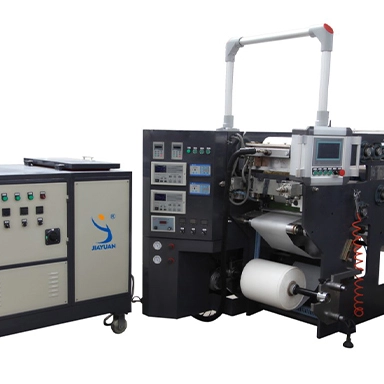
Engineers and plant managers rely on rigid decision frameworks. Evaluating an industrial hot melt coating machine demands looking past basic specifications. You must assess real-world operational tolerances.
Tight coat weight tolerances actively prevent adhesive waste. A variation of just one GSM can cost thousands of dollars annually in wasted glue. It also ensures consistent product tackiness. Modern machines utilize closed-loop feedback systems. Automated coat weight scanners measure the layer in real-time. They instantly adjust pump speeds to correct any microscopic deviations automatically.
Adhesive application is only half the battle. Sophisticated unwinding and rewinding systems are mandatory. The machine must transport delicate materials without distortion. Inadequate tension causes immediate substrate wrinkling. High tension causes material snapping. Both scenarios lead to uneven coating and drastically hurt production yield. High-end systems utilize dancer rollers and precision load cells to maintain perfect web stability.
You must carefully evaluate the melting tank capacity against your target line speed. If the machine runs faster than the tank melts adhesive, the die starves. Advanced systems feature multi-zone temperature controls. They monitor the tank, the heated hoses, and the die lips independently. Precise thermal management prevents adhesive thermal degradation, commonly known as charring. Charred adhesive ruins flow dynamics and damages equipment.
Production flexibility dictates profitability. You must assess the time required for routine width adjustments. Evaluate how long adhesive purging takes. Consider the complexity of substrate threading. Superior machines feature quick-release die mounts. They offer highly accessible roller designs. These features slash downtime during shift changes and product swaps.
Best Practices for Equipment Specification:
Define your absolute maximum and minimum GSM requirements before speaking to vendors.
Measure the tensile strength of your weakest substrate to specify proper load cells.
Calculate your maximum hourly adhesive consumption to size the melt tank accurately.
Specify dual-filter systems to catch contaminants before they reach the extrusion die.
Adopting high-speed industrial machinery brings distinct challenges. We believe in transparently addressing the difficulties of integrating these systems into your current workflow.
Your factory must support the new equipment infrastructure. Power supply stability is critical. Voltage drops will trip sensitive thermal controllers. Exhaust ventilation remains necessary. Even though hot melt is solventless, heated adhesives emit distinct fumes. Operators require a safe breathing environment. Additionally, you must allocate sufficient floor space. Chill rollers and web accumulators require substantial physical footprints beyond the main chassis.
Moving from manual or analog coating to high-speed continuous processes demands deep retraining. Staff must master web tension dynamics. They must understand precise temperature calibration across multiple thermal zones. Furthermore, they must learn safety protocols. Handling pressurized, heated adhesives at 350°F (175°C) presents severe burn hazards. Dedicated safety training is an absolute prerequisite.
Adhesive charring remains a constant operational reality. When hot melt glue sits at high temperatures too long, it degrades into hard black particles. These particles travel through the hoses and destroy precision die lips. You must implement aggressive preventative maintenance. Skipping routine cleaning leads to catastrophic die damage and extended machine downtime.
Standard Purging and Maintenance Protocol:
Inspect die lips daily for microscopic carbon build-up or edge damage.
Purge the main adhesive melt tanks weekly to remove degraded residual glue.
Replace all in-line mesh filters monthly to protect the internal pump mechanisms.
Calibrate all thermal sensor zones quarterly to ensure accurate heating profiles.
Procurement reaches a critical stage when selecting the actual vendor. Shortlisting a reputable hot melt adhesive equipment manufacturer demands a practical vetting checklist. You must look far beyond the initial brochure specifications.
Never purchase complex machinery without rigorous physical testing. A credible manufacturer must offer a dedicated lab or pilot facility. You must run your specific substrate and your exact chosen adhesive on their test machines. This pilot run proves the equipment can handle your specific GSM tolerances and speed requirements before any money changes hands.
Industrial manufacturing needs are rarely solved by off-the-shelf equipment. Your production line possesses unique constraints. The vendor must possess strong custom engineering capabilities. They must willingly customize web widths and roller configurations. Furthermore, they must seamlessly integrate the new coater with your existing downstream converting lines and packaging machinery.
Post-sale support defines the true value of the machinery. You must thoroughly assess domestic or regional technical support capabilities. A robust Service Level Agreement guarantees rapid response times. Extended downtime while waiting weeks for an imported heated hose or a replacement PLC controller destroys your production schedule. Verify that the manufacturer stocks critical spare parts locally.
Vendor Evaluation Checklist
Evaluation Area | Mandatory Vendor Requirement | Risk if Ignored |
|---|---|---|
Pilot Testing | In-house testing lab available | Machine fails on your specific substrate |
Engineering | In-house CAD and custom design team | Poor integration with existing plant lines |
Spare Parts | Local warehousing of critical components | Weeks of downtime waiting on imports |
An industrial hot melt coating machine represents a critical, yield-driving asset for any high-volume manufacturer. Achieving optimal performance completely hinges on the correct pairing of your application method—whether slot die or roll coating—with highly precise web handling systems. Manufacturers who respect strict GSM tolerances and thermal management protocols see immediate improvements in product quality and drastic reductions in material waste. Do not approach this purchase lightly. We strongly encourage buyers to compile their exact substrate data, target line speeds, and specific adhesive rheology. Use this data to request a tailored technical consultation and demand a rigorous pilot run from your shortlisted vendors.
A: The typical return on investment timeline ranges between 12 to 24 months. This depends heavily on your production volume. Transitioning from outsourced coating services or slower, energy-heavy solvent-based lines to in-house hot melt production drastically reduces per-unit costs. Eliminating drying oven energy consumption accelerates the ROI significantly.
A: Generally, no. PUR adhesives are highly reactive to ambient moisture and require specialized, completely airtight melting and delivery systems. PSA systems usually operate with open tanks or standard extruders. Retrofitting a standard PSA machine to safely handle PUR is extremely difficult and rarely cost-effective.
A: Line speed directly impacts fluid dynamics. If you run the web faster than the melt tank and pump RPM can supply adhesive, you risk "starving" the die. This creates uneven, streaky coatings. Conversely, poor tension control at high speeds leads to the substrate dragging against the die lips, causing tears.


