
Views: 0 Author: Site Editor Publish Time: 2026-10-01 Origin: Site


Walking the factory floor today, you will notice a massive shift. Eco-friendly tapes are fundamentally transforming the global packaging landscape. As environmental regulations tighten worldwide, the success of producing high-quality hot melt tape relies heavily on the coating technology you deploy. Production managers frequently face a critical and expensive dilemma. Should they stick with familiar traditional roll methods, or is it time to upgrade to advanced slot die systems?
In this comprehensive guide, we will explore exactly which method fits your specific operational needs. By evaluating the mechanics, material handling, and long-term operational costs, you will learn how to choose the right precision adhesive coating machine. This choice will help you balance upfront budget constraints with the relentless demand for high-speed, uncompromising product quality.
Precision is Paramount: Slot die technology utilizes a highly accurate, pre-metered process. This provides strict control over coating weight and thickness. The mechanism effectively minimizes uneven edges and ensures consistent adhesive application across the entire web.
Contamination Control: Open-pan roll coating is inherently exposed and messy. A slot die system operates within a completely closed-loop environment. This structural design mitigates adhesive degradation, prevents airborne contamination, and maintains stable fluid temperatures.
Speed and Efficiency: Implementing a high-speed system allows manufacturers to significantly outperform traditional roll coaters in overall production volume. It bypasses the hydrodynamic limitations that cause fluid splashing, minimizing costly material waste.
ROI Factor: Traditional roll equipment presents lower initial capital expenditures. However, slot die technology delivers a vastly superior long-term return on investment. This is achieved through substantial reductions in adhesive waste and a sharp decrease in rejected product rolls.
Recent market analyses highlight a definitive shift in the converting sector. Manufacturers are aggressively phasing out solvent-based systems due to tightening volatile organic compound emission standards. This regulatory pressure is forcing a rapid transition to fully solid hot melt adhesives. Consequently, the demand for equipment capable of handling high-viscosity polymers without compromising line speed has skyrocketed. Facilities are no longer just looking to comply with environmental laws. They want to shrink their physical footprint by eliminating massive drying ovens while simultaneously boosting throughput. This industry-wide push for sustainability and efficiency is making precision application technologies the new baseline standard.
Industrial tape manufacturing has experienced a massive shift toward solid hot melt adhesives over the past decade. Converters are now leaning heavily into polymers like Ethylene Vinyl Acetate, Styrenic Block Copolymers, and Polyurethane Reactive formulations. These specific adhesives require no massive drying ovens. As a result, facilities benefit from faster curing times, significantly lower energy consumption, and a reduced physical factory footprint. Hot melt adhesive tapes have become a staple in the packaging, medical, and automotive sectors. In these industries, eco-friendly and solvent-free manufacturing is an absolute requirement.
The physical application method directly dictates the final performance metrics of the tape. This encompasses tackiness, peel strength, shear resistance, and aesthetic finish. On the production floor, hot melt glues are solid at room temperature. They must be heated to extreme temperatures, often between 150°C and 200°C, to achieve a coatable fluid viscosity. Handling these blistering temperatures and heavy fluids requires specialized, robust machinery. If the coating process falters or applies unevenly, the resulting tape will inevitably suffer from weak adhesion spots, adhesive bleed-through, or lopsided roll builds. Selecting the appropriate application technology is one of the most critical engineering decisions a production manager must navigate.
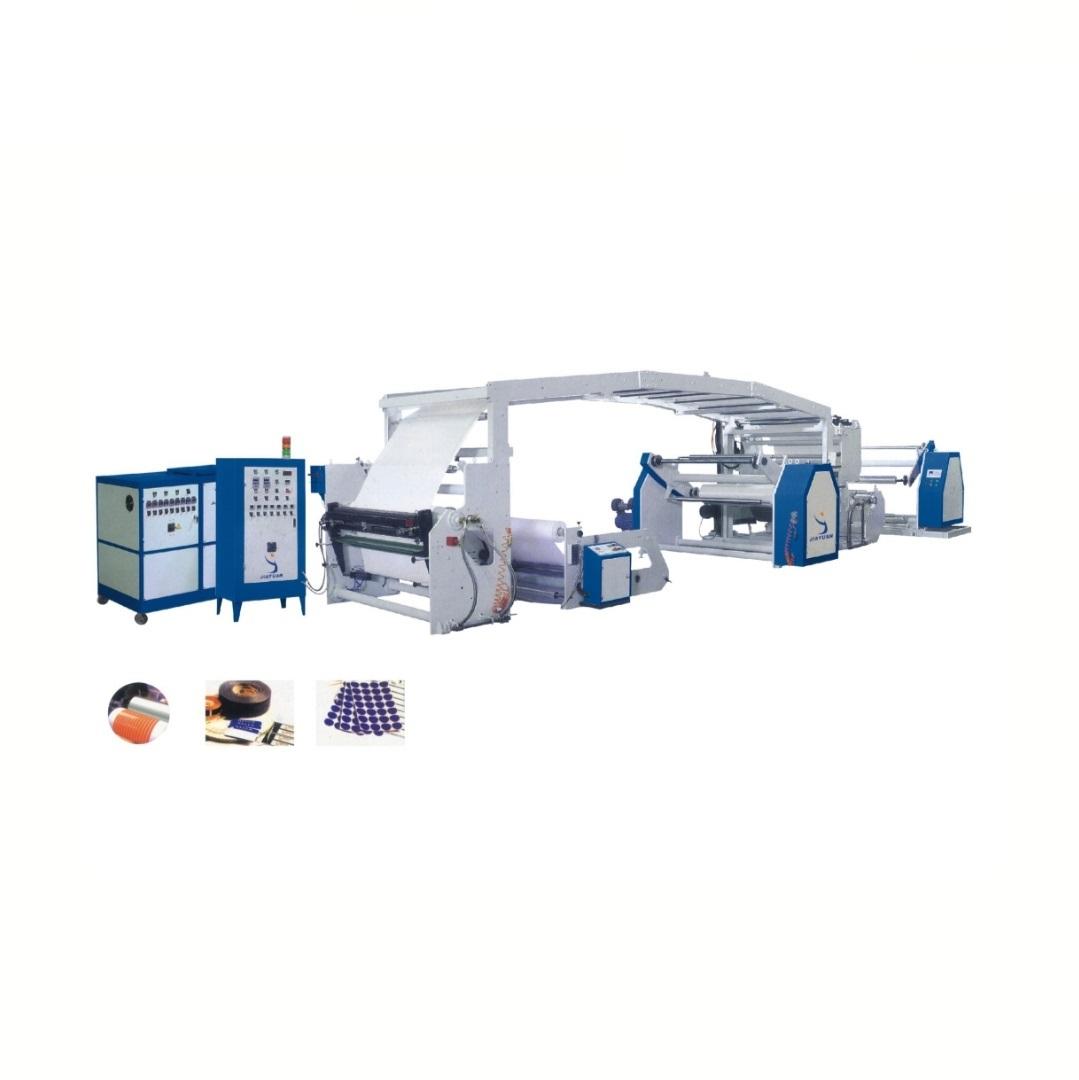
At its core, slot die coating is a sophisticated pre-metered application process. The exact volume of adhesive required for the final product is delivered to the substrate, leaving virtually no excess. Operators melt the hot melt adhesive in a bulk tank. A precision positive displacement gear pump then forces the fluid through a heated, insulated hose into a precision-machined metal die. The internal geometry of this manifold distributes the heavy fluid evenly across its entire width. Subsequently, the adhesive is extruded through a microscopic gap directly onto the moving web. For facilities looking to eliminate operator guesswork, utilizing a dedicated slot die coating machine is highly effective. Standard setups like the JYT-B series can handle coating widths up to 1000mm. They incorporate precise PID temperature controllers to maintain fluid stability up to 200°C, ensuring the fluid flow rate and web speed are the only variables determining final thickness.
One of the defining structural advantages of this technology is its closed-loop architecture. From the melting tank down to the very point of application on the substrate, the hot melt adhesive remains entirely enclosed. This isolation acts as a shield. It protects the sensitive adhesive from environmental variables such as oxidation, ambient factory dust, and floor debris. Furthermore, the enclosed nature prevents rapid temperature fluctuations, ensuring the viscosity remains absolutely constant. Maintaining this integrity is crucial because degraded hot melt quickly leads to gel formation. Gel particles cause coating defects, streaks, and weak spots in the final tape product.
Modern slot dies offer highly adaptable application geometries that traditional methods simply cannot match. By inserting precision-cut metal shims between the two die halves, operators can easily customize the extrusion profile. This ingenious feature allows the equipment to apply continuous full-width coatings, distinct striped patterns, or even intermittent adhesive patches. You can achieve this without requiring a complete, time-consuming changeover of the coating head. Specifically, this flexibility is invaluable in the production of specialty tapes, medical dressings, and automotive masking products where clean, adhesive-free zones are strictly required.
Historically, roll coating has served as the backbone of the converting industry for decades. As a self-metered process, its foundational mechanics typically involve a heated, open pan filled with liquid hot melt adhesive. A pickup roll continuously rotates through this bath, collecting a thick layer of adhesive on its surface. This adhesive is then transferred to an application roll, which presses the fluid onto the moving substrate. Ultimately, the final coating weight is determined by a complex interaction of variables. These include the viscosity of the adhesive, the rotational speed of the rolls, the nip pressure between the cylinders, and the web speed.
Tape manufacturers traditionally utilize several variations of roll coating, depending on the specific product requirements and substrate types. Forward roll coating involves the application roll and the substrate moving in the same direction. While common and easy to set up, it is highly prone to ribbing, which is a corrugated, wavy fluid effect that ruins aesthetics at higher speeds. Reverse roll coating features the application roll moving in the opposite direction of the substrate. This opposing friction helps smooth out the adhesive layer, allowing for slightly better thickness control. Knife-over-roll utilizes a stationary metal blade positioned directly above a backing roll. As the substrate passes between them, the knife physically scrapes off excess adhesive to manually meter the final thickness.
Despite its legacy, the primary drawback of traditional roll coating lies in its open system architecture. The adhesive bath is continuously exposed to the ambient factory environment. This constant exposure leads to rapid heat loss, forcing the system to consume more energy just to maintain the adhesive at its melting point. Moreover, prolonged exposure to oxygen at 170°C causes the hot melt adhesive to oxidize or cook. I have seen operators spend hours pausing production to scrape charred, darkened adhesive from the pan. This degradation alters the tack properties and creates hardened particles that transfer onto the tape, leading to unacceptable product defects and unsellable batches.
When evaluating these technologies side-by-side on the shop floor, production managers must look past initial familiarity. You must judge both methods across several critical performance metrics.
Roll coating is inherently self-metered. Because it relies entirely on fluid dynamics at the roll nip, the coating thickness can fluctuate wildly based on minor changes in adhesive viscosity, ambient temperature, or gradual roll wear. Tolerances in roll coating typically hover around a loose ±5% to ±10%. In contrast, slot die coating is strictly pre-metered. The positive displacement gear pump delivers an exact, unwavering volumetric flow rate. As long as the web speed remains constant, the coat weight is mathematically guaranteed. This method frequently achieves incredibly tight tolerances of ±1% to ±2%.
Hot melt adhesives behave as highly viscous, non-Newtonian fluids. Roll coaters notoriously struggle with high viscosities, especially when operators attempt to increase production speeds. The thick fluid resists smooth transfer between the rotating cylinders, causing air entrainment and uneven, patchy distribution. Slot dies are specifically engineered to handle extreme viscosities. The enclosed system utilizes high-pressure pumps to force the heavy adhesive through the die manifold. This applies the exact shear forces necessary to ensure a smooth, glass-like, bubble-free extrusion onto the web.
In roll coating, the fluid dynamics at the edges of the rolls inevitably cause beading. This is a thick, messy buildup of excess adhesive at the margins of the web. This forces manufacturers to continuously trim the edges, resulting in massive, compounding material waste over a fiscal year. Slot dies completely eliminate this issue. The internal shims dictate the exact, micrometer-level width of the coating, producing sharp, clean edges with zero beading.
Metric | Slot Die Coating | Roll Coating |
|---|---|---|
Metering Method | Pre-metered Volumetric | Self-metered Hydrodynamic |
System Architecture | Closed-loop | Open-pan |
Coat Weight Tolerance | ± 1% to 2% | ± 5% to 10% |
Viscosity Handling | Excellent Up to 100,000+ cps | Moderate Struggles at high cps |
Edge Quality | Sharp, precise, no beading | Prone to heavy edges/beading |
Contamination Risk | Very Low | High |
In the highly competitive tape manufacturing sector, throughput equates directly to profitability. Traditional roll coaters face strict physical speed limits. If an operator runs a roll coater too fast, centrifugal force causes the molten adhesive to splash or mist into the air. The fluid undergoes severe ribbing, destroying the tape's visual and functional quality. By integrating a fully automated high-speed slot die coater, manufacturers entirely bypass these hydrodynamic limitations. Advanced systems equipped with dual-station unwinding and rewinding feature automatic splicing and automatic tension control. The enclosed extrusion process remains remarkably stable, allowing facilities to push line speeds comfortably beyond 150 to 200 meters per minute without sacrificing a fraction of coat quality.
Open-pan roll systems demand intensive, grueling maintenance. The exposed adhesive bath must be drained and thoroughly scrubbed regularly to prevent the buildup of charred, oxidized glue. This arduous cleaning process forces extended, unprofitable machine downtime. Conversely, the closed-loop nature of slot dies inherently prevents oxidation. The system can often be purged quickly. Because the adhesive is never exposed to ambient air, the intervals between deep maintenance cycles are significantly extended. This translates directly to longer, uninterrupted production runs and happier machine operators.
Specialty tapes frequently utilize ultra-thin or delicate substrates like 12-micron BOPP or fragile non-woven fabrics. Roll coating inherently applies high mechanical tension and friction to the web as it aggressively pulls the substrate through the roll nip. This tension can easily stretch, distort, or tear delicate materials. Slot die application is a low-tension, elegant process. The die lip simply grazes the substrate or floats delicately on the fluid meniscus. It applies the adhesive gently, making it the undisputed champion for fragile webs.
Selecting the optimal coating technology for your manufacturing facility is not a decision that should be based solely on the initial sticker price. Production managers must evaluate a complex matrix of material sciences, production targets, and long-term operational costs.
The physical and chemical properties of your raw materials will heavily influence which coating method is appropriate. Hot melt adhesives encompass a wide range of formulations, and each possesses unique rheological properties. Polyurethane Reactive adhesives, for example, are highly reactive to ambient moisture and prone to premature cross-linking if exposed to humid factory air. An open-pan roll coating system exposes these expensive adhesives to the environment, drastically increasing the risk of degradation. Slot die coating’s sealed tanks and heated hoses ensure thermal stability, protecting sensitive formulations from environmental exposure.
Furthermore, substrate characteristics dictate machine selection. Materials such as delicate tissue papers or highly porous foams require precise tension control. Traditional methods often rely on the web's tension to pull the adhesive from the applicator roll, risking distortion. Slot die systems eliminate this mechanical friction, preserving the integrity of heat-sensitive or porous substrates.
Throughput requirements serve as a definitive dividing line between roll coating and slot die capabilities. If your facility operates on intermittent schedules with low-volume, custom runs, a traditional roll coater might sufficiently meet your needs. However, for continuous, multi-shift operations demanding maximum output, the physical limitations of roll coating become a severe bottleneck. The self-metered nature of roll coating simply cannot maintain strict coat weight tolerances at elevated speeds. The precise volumetric control of slot dies allows systems to operate at blistering line speeds without sacrificing cross-web uniformity or edge definition.
While the initial capital expenditure for traditional roll coating equipment is generally lower, evaluating the Total Cost of Ownership over a five- to ten-year lifecycle paints a drastically different financial picture. A comprehensive analysis must account for material waste, maintenance downtime, energy efficiency, and defect rates.
Cost Factor | Traditional Roll Coating | Slot Die Coating |
|---|---|---|
Initial Capital Expenditure | Lower | Higher due to precision machining and pumps |
Coat Weight Tolerance | ± 5% to 10% | ± 1% to 2% |
Adhesive Waste Edge Trim | High messy edges require wider trimming | Minimal sharp edge control |
Maintenance & Cleaning | Frequent open pan cleaning, char removal | Low closed system prevents oxidation/charring |
Energy Consumption | Higher heat loss from open baths | Lower insulated, closed-loop system |
The precise coat weight tolerance of slot die technology yields massive material savings. Over-applying a hot melt adhesive by just 5% to compensate for uneven roll coating can cost a high-volume facility tens of thousands of dollars annually. By applying the exact required thickness, slot die systems often achieve a full return on investment through raw material savings alone.
When production managers recognize the limitations of their current legacy systems, the immediate question is whether to retrofit existing roll-to-roll machinery with a slot die head or to invest in an entirely new coating line. Retrofitting can appear as an attractive, cost-effective intermediate step. It involves mounting a slot die head, a precision gear pump, and a hot melt delivery system onto the existing web handling framework. However, successful retrofitting demands that the existing machine possesses exceptional web tension control and a highly precise backing roll. If your backing roll has even a few microns of runout or wobble, the pre-metered advantage of the slot die will be completely negated.
If the existing infrastructure is aging or lacks advanced servo-driven tension controls, investing in a dedicated, purpose-built machine is the most prudent engineering decision. A newly integrated system ensures that the unwinding, fluid delivery, coating, and rewinding processes communicate seamlessly through a unified programmable logic controller. This minimizes integration risks and maximizes overall equipment effectiveness.
The financial justification for upgrading to slot die technology is deeply rooted in defect reduction and premium market positioning. In the adhesive tape industry, rejected rolls due to uneven tackiness, poor peel strength, or aesthetic flaws directly cannibalize profitability. Slot die coating virtually eliminates these inconsistencies. In addition, the ability to produce defect-free, high-performance tapes allows manufacturers to confidently enter premium markets where strict regulatory tolerances are mandatory. The initial premium paid for slot die equipment is typically recovered within 12 to 18 months through a combination of reduced adhesive consumption, lower maintenance labor, and the total elimination of unsellable scrap material.
When subjected to rigorous factory-floor analysis, slot die coating clearly outperforms traditional roll coating. It delivers unparalleled precision, handles demanding viscosities with ease, and unlocks line speeds that older technologies simply cannot sustain. While roll coating may still hold a place in low-speed, less demanding applications, modern hot melt tape production demands the high efficiency and strict tolerances of pre-metered systems.
If your facility is struggling with high defect rates, excessive edge trim waste, or frequent maintenance downtime, it is time to evaluate your equipment. We highly recommend exploring the advanced solutions offered by JY-WELL. Whether you need a standard setup or a fully automated high-speed line, selecting the right machine from the JY-WELL portfolio will instantly elevate your production quality and safeguard your profit margins. Upgrade your system today to boost your facility's long-term strategic value.
From an engineering standpoint, slot die coating is exceptionally well-suited for high-viscosity fluids, far outperforming traditional roll coating methods. Viscosity is measured in centipoise, where water represents 1 cps and thick honey is around 10,000 cps. Standard hot melt adhesives typically range between 10,000 and 50,000 cps, but specialized formulations can easily exceed 100,000 cps. Because a slot die machine utilizes a closed-loop system with positive displacement gear pumps, it can force highly viscous, non-Newtonian fluids through the die lip with immense pressure and consistency. If your production involves heavy, high-tack hot melt formulations, slot die technology is the scientifically sound choice.
Evaluating the cost difference requires distinguishing between Capital Expenditure and Operational Expenditure. Strictly looking at the initial purchase price, traditional roll coating equipment is generally cheaper because the mechanics are simpler and require less precision machining. However, when analyzing the long-term operational costs, slot die coating proves to be significantly more cost-effective. Roll coating systems inherently waste more material due to their inability to control edge definition, requiring manufacturers to trim and discard messy edges. Additionally, the open-pan design leads to adhesive charring and degradation, resulting in frequent machine downtime. The material savings and higher operational uptime of slot die systems rapidly offset their higher initial price tag.
Yes, one of the most significant technical advantages of slot die coating is its versatility in pattern application. Unlike roll coaters, which require entirely new, custom-engraved cylinders to change a coating pattern, slot dies utilize interchangeable internal components called shim plates. By altering the geometry of the shim, operators can dictate exactly where the adhesive flows. This allows for the creation of continuous stripes, multiple narrow lanes, or specific grid patterns without changing the primary hardware. By integrating high-speed pneumatic valves, the coater can even perform intermittent coating, creating distinct islands of adhesive with sharp leading and trailing edges.
Slot die coating is universally recognized as the superior method for processing ultra-thin or highly delicate substrates. The primary issue with applying adhesive to thin materials, such as 12-micron PET films or delicate non-wovens, is mechanical stress. In traditional roll coating, the substrate is subjected to high web tension and direct friction as it is pulled against the applicator roll. This friction can easily stretch, wrinkle, or tear thin films. Slot die coating is a non-contact or very low-contact process. The adhesive is extruded directly onto the web as it passes over a precision backing roll, requiring minimal tension and ensuring the structural integrity of thin substrates remains completely uncompromised.
Traditional roll coating is highly susceptible to several common defects due to its open-pan and hydrodynamic nature. The most frequent issue is ribbing, which creates parallel, wavy lines of adhesive across the web, severely impacting optical clarity and adhesion uniformity. Air entrainment is another major defect, where high roll speeds trap air bubbles in the viscous fluid, leaving voids in the final tape. Additionally, operators frequently battle with edge beading, where excess adhesive builds up heavily on the margins of the substrate, necessitating significant edge trimming and causing uneven roll builds during the rewinding process.
Slot die coating drastically reduces adhesive waste through its highly precise, pre-metered delivery system. Because a gear pump dictates the exact volumetric flow of the adhesive, there is no over-application or guesswork involved in achieving the target coat weight. Furthermore, the internal shim plates dictate the exact coating width down to the micrometer, creating sharp, perfectly defined edges without the messy beading associated with roll coaters. This precision eliminates the need for wide edge trimming. Finally, the closed-loop system prevents the adhesive from oxidizing and charring, meaning manufacturers do not have to discard degraded, unusable glue from an open pan.


