
Views: 0 Author: Site Editor Publish Time: 2026-10-27 Origin: Site


Material bonding acts as the hidden backbone of modern footwear. Lightweight and highly durable shoes are no longer a luxury. They represent a baseline consumer expectation. Today’s athletic and outdoor footwear must survive grueling conditions. At the same time, they need to feel virtually weightless on the foot. Achieving this delicate balance relies entirely on the unseen internal architecture of the shoe.
Ethylene-Vinyl Acetate, commonly known as EVA, and Thermoplastic Polyurethane, referred to as TPU, have emerged as the undisputed industry standards for midsoles, outsoles, and structural uppers. Fusing these distinct polymers effectively requires highly advanced technology. Basic glues simply cannot withstand the mechanical stress of a marathon or a rugged mountain hike.
Currently, the footwear manufacturing sector is undergoing a massive regulatory and technological shift. Global production hubs are strictly enforcing volatile organic compound emission limits. Consequently, major athletic brands are aggressively phasing out solvent-based primers and cements. This industry-wide mandate drives the rapid adoption of 100 percent solid hot melt technologies. Furthermore, the relentless consumer demand for lighter shoes requires thinner thermoplastic films. Bonding these ultra-thin layers without thermal distortion demands unprecedented precision from modern lamination equipment. Hot melt lamination stands as the most efficient, eco-friendly, and durable method for bonding these synthetic substrates.
In this comprehensive guide, production managers and manufacturing engineers will navigate the intricacies of the lamination process, equipment selection, and advanced troubleshooting. This knowledge empowers facility leaders to make informed, future-proof purchasing decisions.
Hot melt lamination delivers superior bond strength, flexibility, and breathability compared to outdated solvent-based adhesives. This ensures long-lasting footwear performance under extreme stress.
Investing in a specialized industrial laminator guarantees precise temperature and tension control. Maintaining zero-tension web handling is an absolute necessity for preventing foam distortion during high-speed production.
Modernizing your facility with automated coating lines significantly accelerates production throughput. Simultaneously, it slashes toxic emissions and raw material waste.
Selecting the optimal equipment requires a deep evaluation of coating methods, polyurethane reactive adhesive compatibility, and the manufacturer’s technical support infrastructure.
To truly grasp the importance of advanced lamination techniques, we must first examine the foundational materials that dominate modern shoe construction.
Ethylene-Vinyl Acetate serves as a highly versatile copolymer. It delivers exceptionally low weight combined with superior shock absorption. Flexibility remains one of its strongest attributes. Walk onto any footwear factory floor, and you will see this foam serving as the primary building block for midsoles and insoles. Its closed-cell foam structure traps microscopic air pockets. This provides excellent cushioning that absorbs harsh impact forces. However, the material possesses a notoriously low surface energy. It repels liquids naturally. This characteristic makes it incredibly stubborn to bond without specialized chemical or thermal intervention.
Thermoplastic Polyurethane acts as the tough, resilient counterpart to cushioning foams. Bridging the gap between rubber and rigid plastic, this polymer is prized for extreme abrasion resistance, elasticity, and structural support. It remains the material of choice for rugged outsoles, waterproof breathable membranes, and rigid upper heel counters. Unlike many standard plastics, it maintains flexibility in freezing temperatures and resists industrial oils. Its high tensile strength stabilizes the foot, making it indispensable for high-performance athletic and safety footwear.
The synergy between these two polymers is undeniable. Combining pillowy cushioning with armor-like durability creates the ultimate composite material for high-performance shoes. This combination allows a sneaker to absorb internal shock while resisting external abrasion. Yet, bonding them permanently presents a complex engineering challenge. Basic stitching creates holes that compromise waterproof membranes. Traditional cold gluing often cracks under continuous flexing. Therefore, thermal fusion through hot melt lamination becomes mandatory. This process locks the materials together without degrading their individual mechanical strengths.
Lamination transforms individual layers into a unified composite that is vastly stronger than the sum of its parts. In footwear manufacturing, this specific thermal process represents the gold standard for joining synthetic substrates.
Historically, assembly lines reeked of harsh chemicals. Factories relied heavily on solvent-based adhesives to bond shoe components. Today, top-tier brands mandate zero-solvent supply chains to comply with stringent environmental, social, and governance standards. Because solid hot melt adhesives contain zero solvents, they eliminate toxic fumes entirely. In addition, they remove the need for massive, energy-hogging drying ovens, drastically reducing the factory's carbon footprint.
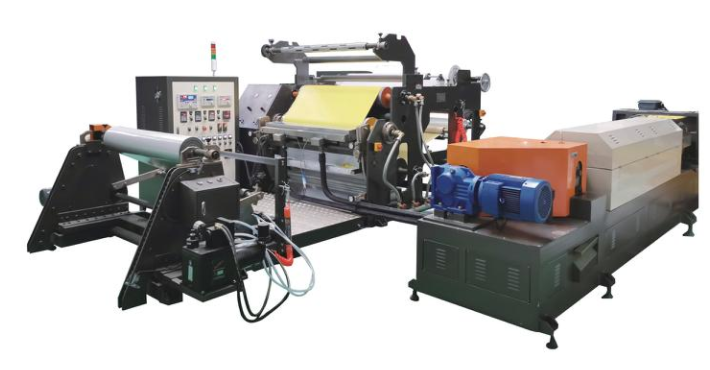
The heartbeat of this eco-friendly process relies on specialized industrial hardware. At its core, a high-performance thermoplastic adhesive laminating machine operates by transitioning a solid polymer into a fluid state and applying it flawlessly to a moving web of material. The system features a heated melting tank that liquefies the adhesive blocks. High-precision gear pumps then push this molten liquid through insulated hoses to a coating head. The head extrudes a microscopic, uniform layer onto the substrate surface. The two materials are instantly pressed together between heavy mechanical rollers. As the adhesive cools, it solidifies, forming a permanent, unbreakable bond in seconds.
Achieving a flawless, durable bond requires strict adherence to a multi-stage process. On the factory floor, operators must monitor every variable to maintain the structural integrity of the shoe materials.
Success begins before the glue even touches the material. Both polymer surfaces must be pristine. Lingering dust, machine oils, or residual mold-release agents will instantly cause the bond to fail. Because cushioning foams have low surface energy, operators frequently utilize corona treatment systems. This high-frequency electrical discharge bombards the foam, raising its surface tension. Line engineers often verify this improvement using dyne pens. Proper surface tension ensures the hot melt adhesive can properly wet out and anchor itself to the cellular structure.
Once prepped, the thermal delivery system takes over. The melter tank heats the solid adhesive to a precise temperature, typically between 120 degrees Celsius and 160 degrees Celsius. Maintaining thermal consistency is critical. If the hoses experience cold spots, the adhesive viscosity spikes, leading to uneven application. Experienced operators listen for the steady, rhythmic sound of the pneumatic pumps. This confirms a continuous, smooth flow of molten polymer to the coating station without cavitation.
The coating head then takes center stage. Precision is paramount at this phase. Operators dial in the exact coat weight, measured in grams per square meter. Applying a heavy, thick layer will render the shoe stiff and heavy, destroying its athletic appeal. To maintain crucial breathability and flexibility, the machine often applies the adhesive in a porous, micro-dot pattern or a randomized fiber spray, rather than a suffocating solid sheet.
Immediately following the coating, the two layers converge at the nip rollers. These highly calibrated steel and rubber cylinders apply exact pneumatic pressure. This forces the adhesive into the microscopic pores of both substrates. It is a delicate balancing act. Insufficient pressure results in a weak, superficial bond. Conversely, excessive pressure crushes the closed-cell foam structure, permanently destroying its shock-absorbing bounce.
The final stage stabilizes the newly formed composite. The laminated web passes over large chilling rollers. You can often feel a distinct temperature drop near this part of the line. Rapid heat dissipation forces the hot melt to solidify instantly, locking the materials together. Because there is no solvent to evaporate, the composite material can be immediately rewound onto a master roll. It is then ready for die-cutting into shoe components without any requisite curing delays.
Procuring the right hardware separates highly profitable production lines from those plagued by constant downtime. An industrial laminator must possess specific engineering features to handle the unique physics of footwear polymers. Investing in a robust EVA hot melt lamination machine ensures consistent quality across varied production runs.
Elastic foam acts remarkably like a rubber band. It stretches effortlessly under mechanical pulling. If the laminator pulls the foam too tightly during bonding, the material will inevitably try to snap back to its original dimensions as it cools. This causes the finished composite to warp, curl, or wrinkle severely. Top-tier equipment utilizes closed-loop, automated tension control systems. Equipped with highly sensitive load cells and magnetic powder brakes, these systems continuously micro-adjust the web speed. Industrial standards demand systems capable of maintaining tension accuracy within plus or minus 1 Newton, ensuring the material feeds into the nip rollers with near-zero tension.
Thermal management dictates success or failure. The machinery must feature multi-zone Proportional-Integral-Derivative temperature controllers. Look for systems offering a tight tolerance of plus or minus 1 degree Celsius across the melt tank, heated hoses, and slot die lip. If the adhesive runs too hot, it will warp or melt the ultra-thin thermoplastic membranes. If it runs too cold, the adhesive loses its tackiness before reaching the nip rollers, resulting in immediate delamination.
When evaluating machinery, the coating technology is a primary consideration. Roller coating uses rotating cylinders to transfer adhesive. While cost-effective, it is generally limited to thick, full-coverage applications. In contrast, slot die coating extrudes the adhesive through a precision-machined steel lip. Slot dies are overwhelmingly preferred in modern footwear manufacturing. They offer unparalleled accuracy in coat weight control and can easily be configured to apply the breathable patterns vital for athletic shoes.
Installing state-of-the-art equipment is only the first step. Achieving a high return on investment demands the continuous, strategic optimization of your daily operational parameters. Upgrading to a highly automated TPU hot melt coating line provides the foundational control needed for maximum efficiency.
Factory managers must perfectly synchronize the line speed with the adhesive's open time. This is the brief window when the glue remains tacky. If the line races too fast, the substrates hit the nip rollers before the adhesive has developed enough green strength, causing the layers to slip. If it crawls too slowly, the hot melt cures prematurely in the ambient air. Establishing strict standard operating procedures based on specific adhesive chemistries ensures consistent quality at optimal operating speeds, which often range up to 50 meters per minute on high-end lines.
Industrial glue represents a massive recurring expense. Modern coating lines mitigate waste by integrating edge-control sensors and programmable logic controllers. These automated eyes track the exact width of the wandering master roll. They command the slot die to apply adhesive exclusively to the target surface. This prevents edge-bleed, reducing raw material consumption by up to 15 percent while stopping rogue adhesive from fouling the machine's internal rollers.
Neglect destroys machinery. Hot melt adhesives left to bake at high temperatures will eventually degrade into hard, carbonized char. This char clogs hoses and ruins precision slot die lips. Implementing a ruthless preventative maintenance schedule is non-negotiable. Operators must routinely purge the melter tanks during material changeovers. Using specialized flushing compounds keeps the internal plumbing pristine, thereby preventing disastrous mid-shift breakdowns.
While standard polyolefin or ethylene-based hot melts are perfectly adequate for casual slippers or fashion sneakers, the high-performance athletic sector demands a much more aggressive chemical solution. Polyurethane reactive adhesives undergo a unique two-stage curing process. Initially, they behave like standard hot melt, cooling to form a fast physical bond. However, a secondary chemical reaction occurs with ambient moisture, causing the adhesive to cross-link into an irreversible thermoset plastic.
Performance Specification | Polyurethane Reactive Hot Melt | Standard Polyolefin Hot Melt |
|---|---|---|
Curing Mechanism | Moisture cross-linking (Thermoset) | Thermal cooling (Thermoplastic) |
Heat & Wash Resistance | Exceptional (Cannot be remelted once cured) | Moderate (Will remelt under high heat) |
Flex Fatigue Resistance | Superior (Ideal for athletic running shoes) | Adequate (Suitable for casual footwear) |
Breathability Compatibility | Excellent (Maintains structure in micro-dot patterns) | Good (Prone to spreading if applied too thick) |
Equipment Requirement | Requires sealed, moisture-free melting systems | Standard open-tank melters are sufficient |
If you are manufacturing heavy-duty hiking boots, military tactical footwear, or extreme sports shoes, utilizing a sealed, moisture-free reactive laminating system is absolutely critical. It ensures the shoe outlasts the harshest environments.
Even the most sophisticated automated lines occasionally produce defects. Diagnosing the root cause quickly on the factory floor saves thousands of dollars in scrapped materials.
Nothing is more frustrating than watching the laminated layers peel apart effortlessly after exiting the machine. This failure is almost always traced to inadequate adhesive coat weight, application temperatures dropping below specification, or using expired reactive adhesive that has already begun cross-linking in the drum. Operators should immediately verify thermal probe readouts and incrementally increase pump speeds to raise the coat weight. Destructive peel testing must confirm that the substrate tears before the glue fails.
Surface wrinkles and trapped air bubbles instantly ruin the aesthetic and structural value of a shoe upper. This defect points directly to mechanical misalignment. Wrinkling occurs when the highly elastic foam is stretched under excessive unwind tension before bonding. Bubbling happens when the nip rollers are not perfectly parallel, creating uneven pressure zones that trap atmospheric air. Recalibrating the load cells and verifying roller alignment with precision mechanical gauges will resolve these issues.
Athletic brands frequently reject laminated rolls because the composite feels stiff, board-like, and restrictive. This happens when operators mistakenly apply a thick, continuous sheet of adhesive. It creates a solid plastic wall between the foam and the outer film. The solution is straightforward. Reduce the total adhesive volume and switch the application method from a solid slot die extrusion to a breathable dot-coating or fiber spray pattern. This preserves the natural flex of the materials.
Procuring heavy industrial machinery is a major capital expenditure. The long-term profitability of your lamination operations relies entirely on choosing an original equipment manufacturer that acts as an engineering partner rather than just a vendor.
Off-the-shelf, one-size-fits-all machines rarely deliver optimal results for complex footwear designs. Scrutinize the manufacturer's engineering agility. Can they custom-build roller widths from 1000 millimeters to 2000 millimeters to match your specific raw material suppliers? Can they integrate specialized heating zones for high-viscosity reactive applications? A reputable manufacturer will modify the machine's core architecture to meet your exact production targets.
The true value of an equipment builder is proven weeks after the machine arrives on your floor. Complex tension controls and sealed delivery systems require specialized knowledge. Prioritize manufacturers that provide comprehensive on-site commissioning, rigorous operator training, and detailed troubleshooting manuals. Ensure they maintain a robust inventory of critical spare parts. Waiting a month for a replacement thermal sensor can cripple your quarterly production quotas.
Never sign a purchase order based solely on a glossy brochure. The physical interaction between your proprietary foams, films, and chosen adhesives is unique. Always send your raw material samples to the testing facility. Demand a documented, filmed test run to verify that their equipment can achieve your required bond strength and line speed without damaging the substrates. Empirical proof remains the ultimate risk mitigation strategy.
Mastering the hot melt lamination process is no longer optional. It is a vital competency for any manufacturer aiming to produce highly durable, lightweight, and comfortable footwear. The precise thermal fusion of these advanced polymers dictates the ultimate performance and lifespan of the shoe.
Upgrading your facility with modern lamination technology is a strategic business decision that pays immediate dividends. Advanced machinery significantly reduces raw material waste, eliminates toxic emissions, and drastically accelerates your daily production schedules while ensuring superior product quality consistently.
Are you ready to elevate your footwear manufacturing capabilities? Explore the advanced coating and lamination solutions at JY-WELL. Contact our expert sales team for a customized machinery consultation. Let our dedicated engineers help you design, test, and optimize the perfect production line tailored to your specific material requirements.
Polyurethane Reactive hot melt is widely considered the optimal choice for high-performance footwear lamination. Unlike traditional thermoplastic adhesives, it undergoes a chemical cross-linking process upon exposure to ambient moisture, creating a permanent thermoset bond. This provides incredible bond strength, enduring flexibility, and exceptional resistance to extreme temperature fluctuations and moisture.
Yes, high-quality industrial laminating machines are engineered for immense versatility. By carefully adjusting the automated tension controls, nip roller pressure, and multi-zone temperature settings, operators can successfully laminate a wide variety of substrates. These machines frequently process woven fabrics, non-wovens, high-density foams, and advanced waterproof breathable membranes used in modern shoe uppers and linings.
Breathability is maintained by altering the physical geometry of the adhesive application. Instead of applying a solid, continuous film of glue that acts as a vapor barrier, advanced coating lines utilize specialized techniques such as dot coating, mesh coating, or fiber spray coating. These methods deposit the adhesive in microscopic patterns, leaving intentional, unglued gaps that allow air and moisture vapor to pass freely through the laminated composite.
In a high-volume, continuous production environment, a well-engineered industrial laminating machine typically boasts a lifespan of 10 to 15 years or more. Achieving this longevity requires strict adherence to preventative maintenance protocols, including regular adhesive purging, thorough cleaning of the precision coating heads, and the timely replacement of standard wear parts like pneumatic seals, bearings, and thermal sensors.
The required temperature depends heavily on the specific adhesive chemistry used. Generally, standard polyolefin or EVA-based hot melts require melting temperatures between 140 degrees Celsius and 170 degrees Celsius. Polyurethane reactive adhesives typically operate at slightly lower temperatures, usually between 110 degrees Celsius and 140 degrees Celsius, to prevent premature cross-linking in the hoses. Precise temperature control within plus or minus 1 degree Celsius is crucial to prevent warping the sensitive TPU films.
Preparing EVA foam requires addressing its naturally low surface energy. First, the surface must be entirely free of dust, oils, and mold-release agents left over from the foaming process. Second, factory floors typically employ inline corona treatment. This process uses a high-frequency electrical discharge to oxidize the foam's surface, increasing its surface tension. Operators confirm readiness when dyne pen ink spreads evenly across the foam without beading up, ensuring the hot melt adhesive can penetrate and anchor securely.


