
Views: 0 Author: Site Editor Publish Time: 2026-10-16 Origin: Site


The demand for high-quality waterproof tapes is surging across the construction, automotive, and plumbing sectors. Manufacturers now face a critical decision when upgrading their production lines. They must choose the right coating technology. This single choice directly impacts product quality. It also determines daily production efficiency and overall return on investment.
Today, two industry technologies dominate the tape market. These are butyl rubber coating and hot melt adhesive coating. Both are widely used for sealing and bonding. However, their chemical properties, manufacturing processes, and ideal field applications differ significantly. This comprehensive guide compares both methods across performance metrics, cost structures, and machinery requirements. It will empower you to make an informed equipment investment tailored to your factory floor.
Butyl rubber coating delivers superior weather resistance, UV stability, and long-term waterproofing. It stands as the premier choice for heavy-duty outdoor and construction tapes.
Hot melt adhesive coating provides rapid curing times. It offers exceptional cost-effectiveness for indoor packaging or light-duty sealing tasks.
Investing in specialized extrusion technology yields a substantially higher long-term return on investment for manufacturers targeting premium industrial sectors.
Equipment architectures are starkly different. Processing butyl requires robust high-pressure extrusion capabilities to handle immense viscosity. Hot melt systems rely on straightforward melting tanks and slot die applicators.
Recent industry analyses indicate a massive shift toward long-lasting, weather-resilient sealing materials. This trend is driven by stricter global building codes and a growing focus on sustainable infrastructure. Extreme weather events are forcing contractors to abandon temporary adhesive fixes in favor of permanent sealing solutions.
Specifically, the construction and automotive sectors are demanding materials that can withstand decades of thermal expansion and structural shifting. Consequently, tape manufacturers are moving away from standard adhesives for critical applications. They are heavily investing in advanced rubber extrusion technologies to capture high-margin industrial contracts. Upgrading your production line to meet these rigorous standards is no longer optional. It is a mandatory step for long-term business survival.
Butyl rubber is a synthetic copolymer composed of isobutylene and isoprene. This specific chemical structure grants the material unique physical properties. Its most notable trait is its non-drying and non-hardening characteristic. Traditional adhesives become brittle over time. In contrast, butyl remains permanently flexible. It adapts effortlessly to structural shifts and thermal expansion.
Furthermore, its aggressive instant tack is highly valued by field engineers. It bonds firmly to a wide array of surfaces immediately upon contact. Coupled with its unparalleled impermeability to both air and moisture, these qualities make it the undisputed gold standard for sealing commercial roofs, residential windows, and automotive components.
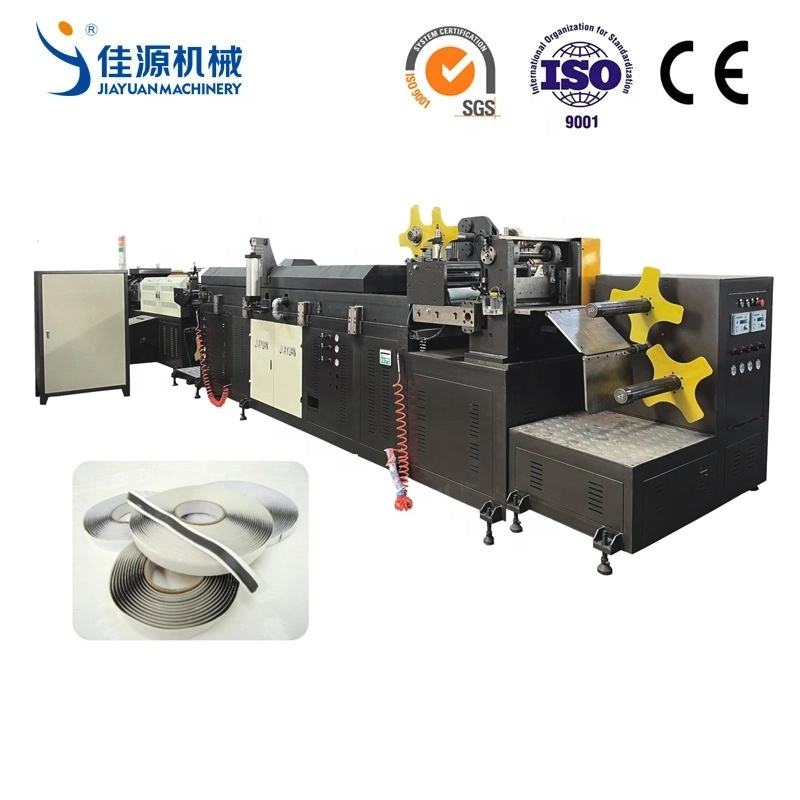
Butyl rubber exhibits massive molecular density and viscosity. Standard coating equipment simply fails under this load. To achieve a flawless product, manufacturers must deploy a specialized butyl rubber extrusion coating machine. This machinery is engineered specifically to masticate and push stubborn raw materials.
The production process involves precise multi-stage heating within a reinforced extruder barrel. High-end equipment typically features multi-zone temperature control systems with an accuracy of plus or minus one degree Celsius. Once the rubber reaches optimal plasticity, a heavy-duty screw pushes it through a precision slot die. It is then extruded evenly onto a moving substrate like aluminum foil or non-woven fabric. This high-pressure method guarantees a consistent coating weight. It eliminates microscopic air bubbles and creates a flawlessly reliable seal.
Hot melt adhesives are thermoplastic polymers. In their natural state at room temperature, they exist as solid blocks or pellets. When exposed to heat, they rapidly transform into a workable viscous liquid.
In a typical manufacturing setup, operators melt the adhesive down in a dedicated heated tank. From there, a gear pump pushes the liquid through temperature-controlled hoses. It is applied to the tape substrate via a slot die or spray head. Once applied, the adhesive cools and solidifies almost instantly. This streamlined process is highly efficient and perfectly suited for high-speed continuous production runs.
Hot melt technology brings several distinct benefits to the factory floor. It supports incredibly high production speeds and reduces initial equipment capital expenditure. It also boasts rapid setting times that are ideal for fast-paced assembly lines. Additionally, it bonds well to a variety of lightweight substrates.
However, the system has notable engineering limitations. Hot melt adhesives are highly sensitive to environmental temperature fluctuations. In extreme cold, the adhesive can crystallize and become brittle. This leads to catastrophic bond failure. Conversely, under intense heat, it may soften and creep. Standard hot melts also lack robust UV resistance, rendering them less effective for long-term outdoor exposure.
To make an informed decision, factory managers must evaluate both technologies across critical performance and operational metrics. The table below outlines the core differences.
Performance Metric | Butyl Rubber Coating | Hot Melt Adhesive Coating |
|---|---|---|
Waterproofing & Weathering | Excellent. Closed-cell structure blocks all moisture and air. | Moderate. Can degrade or swell under continuous water pooling. |
Operating Temperature Range | Wide spectrum. Remains stable from minus 40 to 120 degrees Celsius. | Narrow window. Prone to cracking in winter and creeping in summer. |
Adhesion Flexibility | Permanent flexibility. Adapts to dynamic structural movements. | Rigid or semi-rigid upon cooling. Cannot handle severe vibrations. |
Substrate Tolerance | Bonds aggressively to rough, porous, or slightly dirty surfaces. | Requires clean, smooth surfaces for optimal bond strength. |
Equipment Architecture | Heavy-duty extruders, high-pressure pumps, chilled cooling rollers. | Melting tanks, heated hoses, standard slot die applicators. |
Setting up a heavy-duty production floor requires a deep understanding of mechanical forces. Operating a modern butyl sealant coating line involves managing powerful extruders equipped with multi-zone temperature control. These machines utilize specialized internal screws to masticate dense rubber blocks. Following the extrusion phase, chilled cooling rollers immediately stabilize the hot product.
Modern extrusion lines feature sophisticated PLC automation. Integrated sensors monitor pressure and thickness in real-time. This drastically reduces reliance on manual labor while minimizing expensive material waste. Production capacities often range from 150 kilograms to over 300 kilograms per hour, depending on the barrel diameter and motor power.
Hot melt coaters generally occupy a lighter physical footprint on the factory floor. The machinery centers around a melting tank and a straightforward pumping system. While easier to install, the maintenance protocols differ drastically from extrusion systems. Hot melt equipment demands frequent and meticulous cleaning. Operators must prevent charred adhesive buildup inside the tanks and hoses. Maintaining a butyl extruder focuses more on precise die alignment and periodic lubrication of heavy mechanical drive components.
When planning a new production line, the initial capital expenditure is usually the first hurdle. A high-capacity extrusion setup typically demands a higher upfront financial commitment than a standard hot melt system. This price difference reflects the heavy-duty motors, reinforced steel barrels, and complex cooling systems required to process high-viscosity materials.
Hot melt coaters offer a lower barrier to entry. They are attractive for startups focused on high-volume consumer goods. However, savvy manufacturers must evaluate beyond the initial price tag. You must factor in equipment durability, maintenance downtime, and the lifecycle value of the machinery.
Operational expenses hinge on raw material efficiency and the retail value of the finished goods. Butyl raw materials are often supplied in bulk blocks. They can be more expensive per kilogram than hot melt pellets. Yet, the end product value is substantially higher. Waterproof tapes produced via rubber extrusion command premium wholesale prices. This is particularly true in high-margin sectors like industrial roofing and recreational vehicle manufacturing. This premium pricing leads to a much faster amortization of the initial equipment cost.
Market data reveals a distinct trend. The industrial sector is increasingly prioritizing lifecycle cost over the initial purchase price. Builders want sealing solutions that outlast the structure itself.
Butyl rubber is the undisputed champion in the construction arena. Roof flashing, foundation waterproofing, and window installations strictly require permanent flexibility. The material must accommodate building settling and thermal shifting. Butyl maintains an impenetrable seal against water infiltration for decades. Hot melt adhesives frequently fail when exposed to these harsh dynamic outdoor environments.
Automotive and recreational vehicle applications demand exceptional vibration resistance. Butyl rubber serves a dual purpose here. It acts as a watertight sealant and an effective acoustic dampener. Because it remains stable during extreme temperature fluctuations on the road, it is the go-to material for RV leak repairs. It ensures customer satisfaction and drastically reduces warranty claims.
For high-speed packaging and temporary sealing, hot melt adhesive takes the lead. Its rapid setting time on cardboard cartons and plastic films makes it highly cost-effective for indoor applications. In this specific vertical, manufacturers value processing speed and sheer volume over extreme environmental durability.
Before committing to a machinery purchase, clearly define your target demographic. Are you aiming to supply high-margin industrial construction firms? Or is your focus on high-volume consumer retail goods? Carefully assess the substrates you plan to use and your expected daily production volumes. Aligning your equipment capabilities with your specific market strategy is the key to long-term profitability.
If your strategy points toward the premium outdoor market, selecting the right equipment supplier is your most crucial step. When investing in butyl waterproof membrane coating equipment, look for machinery that incorporates advanced PLC control systems. This allows for precise coating thickness adjustments down to fractions of a millimeter. Energy efficiency should also be a priority to keep daily operational costs low. Ensure the manufacturer provides comprehensive after-sales support and readily available spare parts.
Ultimately, the choice between these two technologies comes down to your end product purpose. Hot melt adhesive coating is an excellent solution for fast-paced packaging applications. However, if your goal is to produce uncompromising waterproof tapes for construction and automotive markets, butyl rubber coating is the clear expert choice.
The quality of your final product is heavily dependent on the machinery you deploy. You must choose equipment that directly supports your long-term profit margins. For tailored machinery solutions, explore the comprehensive range of extrusion and coating systems at Jy-well. Their engineering team can configure the perfect production line to match your exact factory footprint and capacity requirements. Reach out today to secure your competitive edge in the waterproof tape market.
The primary differences lie in their chemical composition, flexibility, and waterproofing capabilities. Butyl is a synthetic rubber that never fully cures. It remains permanently flexible and offers superior long-lasting waterproofing. Hot melt is a thermoplastic polymer that sets hard upon cooling. It is better suited for general bonding rather than dynamic sealing.
Generally, no. Processing butyl rubber requires high-pressure extrusion mechanisms and specialized heavy-duty screws. Standard hot melt melting tanks and slot dies simply cannot handle the immense viscosity of rubber. Dedicated extrusion equipment is mandatory for rubber-based production.
It is preferred due to its exceptional UV resistance and its ability to withstand extreme temperature fluctuations. It survives freezing cold and blistering heat without cracking or melting. Its unique closed-cell structure completely blocks both water and air infiltration.
When manufactured using precise machinery that ensures even coating weight and proper substrate bonding, butyl tapes can easily last twenty years or more in harsh outdoor environments. They vastly outperform their hot melt alternatives.
Industrial butyl tapes typically feature a coating thickness ranging from 0.5 millimeters to 2.0 millimeters. Achieving this exact specification requires advanced extrusion dies and precise PLC pressure control to ensure uniformity across the entire tape width.
Precise temperature control is critical during extrusion. If the temperature is too low, the rubber viscosity remains too high, causing excessive motor strain and uneven coating. If the temperature is too high, the material can scorch or lose its structural integrity. Multi-zone heating ensures the rubber flows perfectly through the die.


