
Views: 0 Author: Site Editor Publish Time: 2026-10-31 Origin: Site


The global demand for reliable waterproofing materials in commercial construction, roofing, and civil infrastructure projects is experiencing unprecedented growth. Driven by accelerating urbanization and increasingly stringent building codes related to climate resilience, manufacturers are racing to scale their operations. For facility managers and investors evaluating new equipment, calculating the true return on investment hinges on one critical metric: output capacity.
However, this metric is rarely a static figure printed on a specification sheet. Rather, it is a dynamic outcome influenced by a complex interplay of mechanical engineering, rheological material properties, and integrated automation. This comprehensive guide breaks down the core variables that determine manufacturing throughput. By exploring extrusion mechanics, material behaviors, and strategic upgrades, buyers can make informed, data-driven purchasing decisions that perfectly align with their specific market demands.
Extruder Specifications are Core: The physical size, internal screw design, and motor torque act as the primary engine driving the entire manufacturing process.
Material Matters: Different polymers like HDPE, TPO, EVA, and PVC possess unique melt flow indexes and cooling requirements. These properties directly dictate maximum sustainable line speeds.
Downstream Efficiency is Critical: High extrusion rates become effectively useless if calendering, cooling, and winding systems cannot process the web without compromising quality.
Automation Boosts Actual Yield: Implementing advanced programmable logic controllers and auto-splicing mechanisms bridges the gap between theoretical capabilities and actual daily output.
Dimensions Dictate Volume: The specified width and thickness of the final product mathematically constrain or expand the total kilograms processed per hour.
Before diving into machine mechanics, understanding the broader industry context is essential. Stricter environmental regulations and the rising popularity of "cool roof" systems have fundamentally shifted market demand. Plant managers are increasingly moving away from legacy bituminous applications toward highly reflective, single-ply thermoplastic solutions.
This transition requires equipment capable of handling complex polymer blends at continuous high yields. Modern infrastructure projects demand thicker, more durable membranes to withstand extreme weather events. Consequently, production facilities must upgrade their infrastructure to maintain profitability, pushing equipment manufacturers to engineer wider lines with substantially higher extrusion capacities.
To accurately evaluate equipment, establishing a clear understanding of how throughput is measured within the polymer manufacturing industry is essential. Misinterpreting these metrics often leads to skewed revenue projections and severe operational bottlenecks on the factory floor.
When reviewing specifications for a modern waterproof membrane production line, procurement teams will typically encounter two distinct measurements: weight-based capacity and length-based linear speed.
Kilograms per hour defines the raw processing power of the machine. It indicates exactly how much polymer resin and additive mixture the extruder can melt and push through the die within a 60-minute window. Conversely, meters per minute measures how fast the finished membrane is pulled through the cooling rollers and wound onto a core. While a high-end extruder might easily process 1,200 kilograms per hour, the linear speed will fluctuate drastically depending on whether the facility is producing a thick 2.0mm foundation liner or a thin 1.2mm roofing sheet.
Machinery builders often highlight a theoretical maximum capacity based on continuous operation under perfect, uninterrupted conditions. The reality on the factory floor is quite different. Machines rarely run at absolute peak speeds 24 hours a day.
Actual operational yield is determined by Overall Equipment Effectiveness. This vital metric accounts for machine availability, such as downtime for maintenance or screen changes. It also factors in performance limits and quality control rejections. A highly optimized facility typically aims for an effectiveness rate of 80 to 85 percent. Grasping this distinction prevents engineering teams from overestimating their annual deliverable volumes.
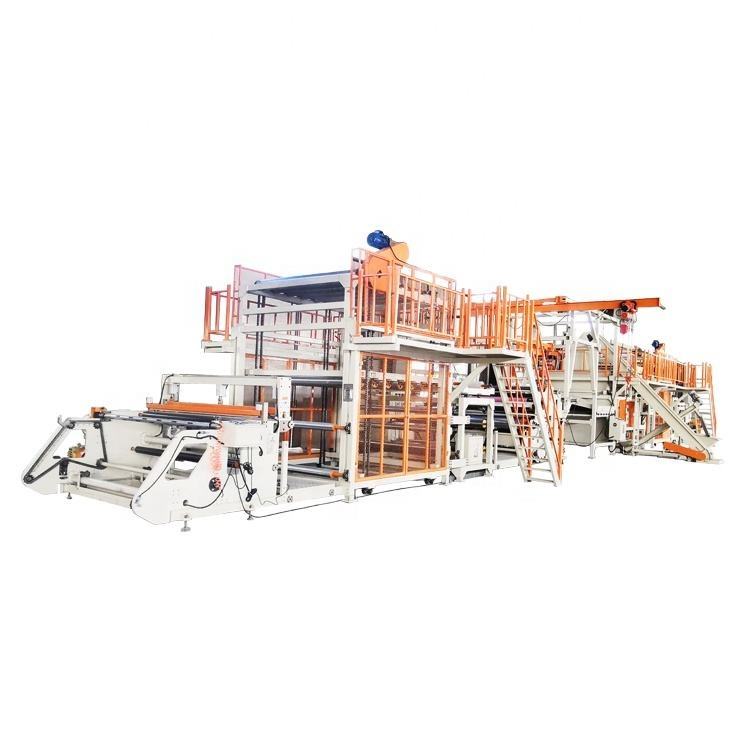
The main extrusion unit dictates the absolute baseline capability of the entire plant. If this central component is undersized or underpowered, no amount of downstream optimization will magically increase total material throughput. It acts as the primary engine for any waterproof membrane extrusion line.
The physical dimensions of the extruder screw are the most significant factors in mass flow rate. Larger screw diameters, such as 120mm or 150mm configurations, feature deeper flights and expansive surface areas. This specialized geometry allows them to intake, melt, and transport substantially higher volumes of plastic pellets per revolution.
Equally critical is the Length to Diameter ratio. Industry-leading extrusion setups typically utilize ratios between 33:1 and 35:1. A longer barrel provides extended residence time for the polymer. This prolonged exposure ensures thorough plasticization and exceptional melt uniformity. Attempting to force high speeds through a short barrel inevitably results in un-melted resin particles and severe surface defects, effectively capping the machine's safe operational limit.
Pushing dense, highly viscous polymers through a restrictive T-die requires immense mechanical force. High-torque permanent magnet synchronous motors deliver the necessary muscle to maintain consistent screw rotation under extreme backpressure. An underpowered motor will quickly stall or overheat when tasked with processing tough compounds.
Beyond raw mechanical force, thermal management plays a pivotal role. As the screw rotates, it generates intense shear heat. Efficient ceramic band heaters must work in perfect harmony with integrated water cooling jackets to maintain precise temperature profiles. If the system fails to dissipate excess shear heat rapidly, the polymer degrades. This forces operators to dial back the line speed to prevent material breakdown.
The specific type of polymer being processed fundamentally alters the capacity equation. Equipment must be meticulously engineered to handle the unique thermal and rheological properties of the target compound.
High-Density Polyethylene offers a relatively predictable melt behavior but requires aggressive downstream cooling due to its high heat capacity. Thermoplastic Polyolefin, being a complex blend of rubber and plastic, is highly prone to shear degradation. Processing it at high volumes requires specialized barrier screws to ensure uniform mixing without overheating. Meanwhile, Ethylene Vinyl Acetate processes at much lower temperatures and flows easily, but its inherently tacky nature threatens to stick to cooling rollers if temperatures are not perfectly calibrated.
To optimize costs and enhance mechanical properties like flame retardancy, manufacturers frequently compound base resins with heavy fillers such as calcium carbonate or carbon black. Introducing heavy fillers increases the overall specific gravity of the melt. While this might artificially inflate the weight-based output, it frequently reduces the linear line speed. High filler loads alter the thermal conductivity of the plastic, changing how it behaves as it exits the die. Furthermore, abrasive additives accelerate wear on the screw and barrel, which gradually erodes machine capacity over time if preventative maintenance is ignored.
Polymer Type | Typical Melt Temperature | Cooling Requirement | Impact on Maximum Line Speed |
|---|---|---|---|
HDPE | 190°C - 220°C | Very High | Speed is often limited by chiller capacity due to high heat retention. |
TPO | 180°C - 210°C | High | Requires specialized screw design to prevent shear heating; moderate speed. |
EVA | 140°C - 170°C | Moderate (Precise) | High potential speed, but limited by material tackiness on rollers. |
PVC | 160°C - 190°C | Moderate | Speed limited by thermal degradation risks; requires strict temperature control. |
Melting and shaping the polymer is only the first half of the manufacturing journey. The ability to rapidly extract heat and solidify the newly formed sheet is frequently the true limiting factor for high-volume production.
Once the molten web exits the T-die, it immediately enters a three-roller calendering stack. These massive, highly polished steel rollers serve dual purposes. They press the hot plastic to the exact required gauge, and they extract latent heat to freeze the molecular structure.
The cooling capacity of this system relies heavily on roller diameter, internal spiral flow channel design, and the flow rate of the chilled water circulating within. Larger rollers provide a substantially greater surface area for thermal exchange. This allows the hot web to remain in contact with the cold steel for a longer duration, ensuring dimensional stability at higher extrusion speeds.
Imagine a scenario where an ambitious operator pushes the main extruder to output 1,500 kilograms per hour, only to find the finished membrane warping or fusing to itself on the winding core. This happens because the chilled rollers could only extract enough heat to support a 1,000 kilogram per hour pace.
To prevent this disastrous bottleneck, the linear speed must be perfectly synchronized with the thermodynamic limits of the chilling circuit. Upgrading to a heavy-duty industrial water chiller and optimizing the fluid dynamics inside the calendering stack are non-negotiable steps for unlocking the full potential of the extruder.
Modern manufacturing relies heavily on smart automation to maximize net yield. By eliminating human error and minimizing the time required for manual adjustments, facilities can drastically increase their total annual output, transforming a standard setup into a true high-capacity membrane coating line.
Advanced Programmable Logic Controllers act as the central nervous system of the production floor. These sophisticated networks synchronize extruder motor speeds, melt pressure, web tension, and multi-zone cooling temperatures simultaneously.
When integrated with automated thickness gauges, such as traversing X-ray or ultrasonic scanners, the control system creates a closed-loop feedback network. The scanner continuously reads the web profile and sends micro-adjustments to the T-die's thermal expansion bolts in real-time. This eliminates the need for operators to periodically halt the line to take manual caliper measurements. Consequently, the machine runs safely at absolute maximum speed while maintaining flawless dimensional tolerances.
One of the most significant drains on actual operational capacity occurs at the very end of the line during the winding process. On older manual lines, the entire machine must be slowed to a crawl or stopped completely every time a roll reaches its target length.
High-yield facilities utilize dual-station winders equipped with material accumulators and automatic flying knife cutters. The accumulator stores a temporary buffer of the sheet. This allows the winder to execute a zero-speed splice while the upstream extruder continues pumping at full capacity, saving dozens of hours of downtime per month.
The laws of mathematical physics dictate that the physical dimensions of the final product directly constrain the processing volume. Output cannot be accurately projected without strictly defining what is being manufactured.
Production equipment is typically categorized by maximum web width. Industry-leading configurations range from standard 2-meter setups to ultra-wide 3-meter or 4-meter formats.
Wider extrusion dies demand exponentially more motor torque to maintain uniform pressure across the entire melt channel. However, they yield vastly superior economies of scale. For instance, running a 3-meter wide line at a speed of 10 meters per minute produces fifty percent more sellable square meterage than a 2-meter wide line running at the exact same pace. This drastically reduces the per-unit manufacturing cost.
There exists a strict inverse relationship between sheet thickness and linear line speed. Because an extruder processes a finite mass of material per hour, a thicker product consumes more mass per linear meter. Producing a robust 2.0mm foundation liner requires the line to run significantly slower than when producing a highly flexible 1.2mm roofing membrane. While the linear speed drops, the total weight processed by the extruder remains relatively constant.
True capacity is not merely about how fast a machine can sprint; it is about how long it can sustain that marathon. Maintenance protocols are a decisive variable in the annual yield equation.
Over time, microscopic polymer degradation and carbon buildup inside the die lips cause flow restrictions. This forces operators to lower the extrusion speed to prevent dangerous pressure spikes in the barrel. Adhering to a strict preventative maintenance schedule ensures the equipment consistently hits its theoretical maximums. Field engineers highly recommend deep ultrasonic cleaning of the screw and routine replacement of degraded heater bands.
Changing product specifications can be a logistical nightmare. Switching from a 1.2mm TPO sheet to a 2.0mm EVA membrane traditionally requires hours of mechanical adjustments and lost production time.
Investing in hydraulic continuous screen changers allows technicians to filter out raw material impurities without ever stopping the screw. Similarly, automated T-dies reduce the time required to achieve a flat, stable thickness profile from hours down to mere minutes. By aggressively minimizing changeover times, manufacturers reclaim lost operational hours and artificially expand their annual capacity.
For procurement teams and investors ready to allocate capital, selecting the correct machinery requires a delicate balance between current operational needs and future market expansion. Instead of relying on vague estimates, use these concrete engineering benchmarks during your selection process.
The most frequent error in equipment procurement is mismatched scaling. Purchasing a massive 2,000 kilogram per hour line when regional sales volume only demands 500 kilograms per hour results in severe operational inefficiencies. Running a large-scale extruder at low capacity leads to polymer stagnation, thermal degradation, and immense energy waste.
Conversely, underbuying forces the equipment to run at maximum capacity constantly, leaving zero buffer for essential maintenance and accelerating mechanical wear. Buyers should target an equipment rating that allows them to comfortably meet projected volumes while running at approximately 75 to 80 percent of the machine's maximum limit.
A machine's theoretical output is only as reliable as the engineering firm that built it. When evaluating potential suppliers, look well beyond the initial specification sheet. Critical differentiating factors include the manufacturer's ability to provide custom screw engineering tailored to your specific proprietary polymer blends. Rigorous Factory Acceptance Testing and comprehensive installation support are mandatory. Rapid access to replacement parts and remote troubleshooting ensures that when inevitable breakdowns do occur, downtime is measured in hours rather than weeks.
Ultimately, production line capacity is not determined by a single component, but by a holistic, deeply integrated system. From the raw torque of the extruder motor and the specialized geometry of the screw, to the thermodynamic efficiency of the cooling rollers and the sophistication of the automated winders, every element must work in perfect concert.
Investing in well-engineered, modern extrusion equipment pays massive dividends through higher operational uptime, drastically lower scrap rates, and unwavering product consistency. Understanding the variables discussed above transforms equipment procurement from a guessing game into a strategic financial decision.
Are you ready to scale your manufacturing capabilities? Consult with the experts at JY-WELL today to design a custom production line meticulously tailored to your specific material requirements and capacity goals. Explore JY-WELL's advanced extrusion solutions to request a detailed machine specification catalog and begin optimizing your facility's output.
Capacity varies significantly based on machine architecture and the specific polymer being processed. A standard commercial line typically ranges from 500 to 1,200 kilograms per hour. However, heavily automated, ultra-wide facilities processing materials like multi-layer TPO or modified Bitumen can easily exceed 2,000 kilograms per hour.
Yes, incremental upgrades are highly effective. Common retrofits include installing a higher-torque permanent magnet motor, upgrading to an automated T-die for faster profile adjustments, expanding the industrial water chiller capacity to allow for faster downstream cooling, and integrating dual-station automated winders to eliminate roll-change downtime.
Excess moisture trapped inside polymer pellets instantly flashes into steam during the high-heat extrusion process. This creates microscopic bubbles, voids, and structural defects in the finished sheet. To prevent this, operators are forced to drastically slow down the line to allow the gas to escape, or they must invest in specialized vented extruders and pre-drying hoppers. Unmanaged moisture is a primary culprit of reduced usable throughput.
Molten polymers retain a massive amount of latent thermal energy. If the downstream calendering and chilling rollers cannot extract this heat rapidly enough, the membrane will deform, shrink, or fuse together when tightly wound onto the storage core. Therefore, the thermodynamic efficiency of the cooling circuit acts as the ultimate speed limit for the entire manufacturing operation.
For processing complex blends like TPO, an L/D ratio of 33:1 to 35:1 is generally considered ideal. This longer barrel configuration provides the necessary residence time to ensure thorough plasticization and uniform mixing of the rubber and plastic phases without causing excessive shear degradation.
Larger calendering rollers provide a significantly greater surface area for heat exchange. When the hot polymer web contacts a larger roller, it remains in the cooling zone for a longer duration at the same linear speed. This enhanced cooling efficiency directly allows operators to increase the extrusion speed without risking material warping or shrinkage.


