
Views: 0 Author: Site Editor Publish Time: 2026-06-16 Origin: Site


Inconsistent hot melt coating thickness represents much more than a minor technical nuisance on the production floor. It directly drives up raw adhesive costs, causes severe downstream delamination, and ultimately damages your brand credibility. Many manufacturers mistakenly blame their operators for these costly daily fluctuations. However, sustained production precision depends heavily on engineered equipment controls rather than human intervention. While environmental factors definitely matter, systemic process variables actually dictate your final product quality.
This article objectively breaks down the mechanical, thermal, and material variables dictating application rates. You will discover exactly how modern machinery resolves these stubborn manufacturing issues definitively. We also provide a detailed decision-stage framework for evaluating advanced equipment upgrades capable of transforming your coating process. Understanding these mechanics empowers you to optimize performance effectively.
Hot melt coating thickness is primarily determined by the ratio of pump delivery rate to web line speed, highly influenced by adhesive viscosity and temperature stability.
Achieving precise coating width and coating weight control requires closed-loop feedback systems rather than manual operator adjustments.
Upgrading to an adjustable coating weight hot melt machine yields measurable ROI through reduced adhesive waste and lower defect rates.
Complex applications require specialized tension and synchronization control, particularly when utilizing a double-sided hot melt coating machine.
Manufacturing deviations impact your bottom line immediately. Operating without strict thickness tolerances leads to cascading failures across multiple departments.
Over-applying adhesive quietly drains your production budget every single shift. Applying just a fraction of a mil above your target specification wastes massive amounts of material. You might easily lose tens of thousands of dollars in excess adhesive annually per line. This hidden financial drain cuts deeply into your operating margins. Operators often over-apply intentionally to avoid dry spots during fast runs. They mistakenly believe extra adhesive guarantees a solid bond. Unfortunately, this practice ignores the sheer cost of wasted polymers.
Under-applying adhesive triggers serious product failures rapidly. You risk poor bond strength and highly inconsistent tack. This problem frequently destroys pressure-sensitive adhesives (PSAs). Such defects pose severe compliance risks across demanding sectors. Strict industries like medical manufacturing or automotive assembly demand tight adherence to specifications. Failing to meet these strict tolerances damages client trust irreparably. For example, a medical transdermal patch failing to adhere ruins brand reputation overnight. Automotive headliners require exact coat weights to survive extreme summer cabin heat.
Frequent line stoppages destroy Overall Equipment Effectiveness (OEE). Manual recalibrations to fix thickness variations halt your continuous production runs. Operators waste valuable time adjusting mechanical settings blindly. These bottlenecks reduce daily output drastically. They also disrupt your broader supply chain commitments. We often see facilities lose valuable hours each week fighting inconsistent coverage. Fixing these bottlenecks requires automated solutions, not more human intervention.
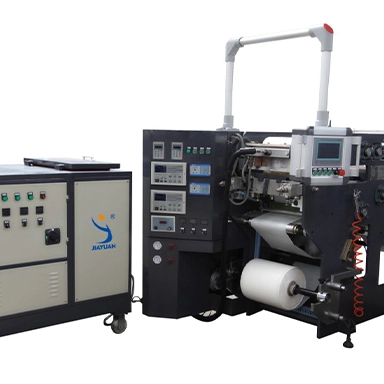
Understanding what dictates hot melt coating thickness requires looking at applied physics. You must control several moving targets simultaneously.
Temperature shares a highly non-linear relationship with hot melt rheology. A drop of just a few degrees at the applicator head spikes viscosity instantly. This rapid change increases coat thickness uncontrollably. It also causes adhesive "starvation" across the web. Starvation occurs when thick fluid fails to reach the outer edges of the die. The fluid dynamics change the moment temperatures shift.
Risk factor: Hot spots create severe thermal degradation quickly. Charred adhesive quickly clogs your precision nozzles. Clogs create visible streaking and entirely unglued sections on your substrate. Maintaining stable thermal zones prevents these damaging fluctuations. You must calibrate your heating elements frequently to ensure absolute uniformity.
The core math dictating application is simple but extremely rigid. Thickness remains a strict function of the fluid volume applied over a specific area per minute. You must balance the pump delivery rate against the web line speed perfectly.
Open-loop systems struggle constantly with this required ratio. Consider what happens when your line speed changes during a ramp-up phase. Roll splicing also triggers sudden speed shifts. The open-loop setup fails to communicate these speed changes instantly to the adhesive gear pump. You end up applying heavy, sloppy deposits. Alternatively, you might leave dangerously thin, dry patches during acceleration.
The substrate itself acts as a massive operational variable. Poor web tension control leads to constant flutter right at the coating head. This flutter creates microscopic variations in your final application. The gap distance between the die lip and the material fluctuates wildly.
Porous substrates demand specific rheological adjustments. Uneven materials like non-wovens act like sponges during application. You must balance viscosity and flow rate carefully. Proper adjustment prevents unwanted bleed-through while maintaining a smooth surface barrier.
Manual adjustments cannot keep up with high-speed production demands. Modern facilities rely on advanced engineering to maintain strict quality standards.
Slot die coating offers distinct advantages over traditional roll coating. You need slot dies for strict tolerance mandates. They completely isolate the sensitive adhesive from environmental contamination. The enclosed fluid path provides superior edge-to-edge uniformity across the entire web. Roll coaters expose the fluid to ambient air, causing premature cooling. Slot dies force the fluid onto the substrate under precise pressure.
Achieving precise coating width and coating weight control relies heavily on advanced internal mechanisms. Manufacturers utilize specialized internal shims to shape the fluid flow. Motorized lip adjustments dynamically minimize edge bead. Edge bead refers to the problematic thickening of adhesive at the outer margins. Controlling this specific phenomenon prevents serious winding defects later on. Heavy edges cause rolls to telescope or warp in storage.
Automated gauge scanners serve as a non-negotiable component for modern quality assurance. Facilities deploy non-contact scanning technologies to guarantee perfection.
Consider these popular measurement systems:
Infrared (IR) sensors detect hydrocarbon bonds to measure actual polymer mass accurately.
Ultrasonic sensors bounce sound waves to calculate total application depth instantly.
Laser displacement systems measure distance variations specifically on opaque substrates.
These scanners continuously monitor the output. They create a reliable feedback loop directly to the gear pump. This setup instantly corrects minor deviations before they become costly defects.
Advanced product designs often require adhesive on multiple surfaces. This requirement introduces significant mechanical complexity.
Applying adhesive to both sides of a substrate presents distinct engineering difficulties. You must accomplish this simultaneously or sequentially. Importantly, you cannot damage the first cured layer during the second pass. Furthermore, the intense dual application process must not cause severe web wrinkling. Heat softens the base material drastically during dual coating.
Operating a double-sided hot melt coating machine requires highly specialized independent tension zones. Dual-chilled rollers must stabilize the fragile substrate immediately after the hot application. These chilling elements extract heat aggressively. They prevent the base material from stretching or warping under intense thermal stress. Proper thermal management keeps the web entirely flat.
Buyers must scrutinize equipment architecture carefully before purchasing. Double-sided systems must feature completely independent pump drives for each specific coating head. Independent drives compensate for the minute differences in required top and bottom coat weights. Relying on a single drive for both sides guarantees asymmetrical application errors. You need discrete control over every single layer.
Selecting the right equipment upgrades requires a structured evaluation process. You must match hardware capabilities directly to your production bottlenecks.
Defining what "good" looks like sets your operational baseline. A successful setup achieves ±5% or better coat weight tolerance consistently. It maintains this strict precision across multiple shifts. You should expect this performance without constant manual operator intervention. Achieving this baseline reduces your scrap rate dramatically.
Evaluating an adjustable coating weight hot melt machine requires matching technical features to exact production goals. The following breakdown illustrates this relationship clearly.
Essential Hardware Feature | Technical Mechanism | Production Outcome |
|---|---|---|
Variable Frequency Drive (VFD) Pumps | Linked directly to precise line-speed encoders. | Automatic weight maintenance during acceleration phases. |
Zoned PID Temperature Control | Provides precise heat management across individual zones. | Eliminates sudden viscosity-driven thickness spikes. |
Motorized Lip Adjustments | Executes automated internal die modifications dynamically. | Mitigates edge bead formation and reduces edge waste safely. |
EtherNet/IP PLC Integration | Connects the applicator natively to the central network. | Allows centralized recipe management and data logging. |
Retrofitting advanced coating heads onto legacy lines carries high risk. Legacy systems often feature poor web handling capabilities. New applicators cannot fix terrible base tension. You must evaluate modern machinery based on PLC integration capabilities. The new equipment must communicate seamlessly with your existing plant network. Standalone systems create isolated data silos.
Always ask prospective vendors for verifiable test-run data. You should never buy machinery based solely on theoretical specifications.
Follow these specific steps during procurement:
Send sample rolls of your specific daily substrate to the manufacturer.
Provide exact batches of your preferred adhesive chemistry.
Demand a live demonstration documenting the thickness variation across a long run.
Review the digital data logs specifically for speed ramp-up phases.
This practical step proves their equipment handles your unique material properties. Do not rely on generic marketing brochures to make large capital decisions.
Controlling the exact thickness of your hot melt application remains a highly solvable engineering challenge. It is definitely not an unavoidable daily cost of doing business. Modern closed-loop controls eliminate the guesswork entirely. Upgrading your equipment protects your margins and guarantees product consistency.
Production managers and facility engineers should conduct a thorough baseline audit immediately. Measure your current daily adhesive waste levels. Evaluate your ongoing web tension stability across all active lines. Document exactly how often operators manually adjust pump speeds. Gather this hard data before requesting any formal equipment quotes.
Stop letting outdated equipment dictate your production quality and material budgets. Schedule a technical consultation today to explore modern hardware upgrades. Request a custom ROI analysis to see how a new precision line transforms your profitability.
A: Manufacturers utilize inline non-destructive testing (NDT) methods to monitor thickness instantly. Common technologies include infrared (IR) sensors, laser displacement systems, or beta gauges. These advanced scanners constantly monitor the moving web without touching the wet adhesive. They provide immediate, accurate feedback to the central control system.
A: This common phenomenon, known as "edge bead," occurs due to complex fluid dynamics right at the die lip. As adhesive exits the narrow slot, surface tension causes the fluid to pool slightly at the margins. Careful internal shim optimization and motorized lip profiling effectively resolve this stubborn issue.
A: Yes. While line speed heavily dictates the applied thickness, it simultaneously impacts the available cooling and curing time. Faster production runs demand highly optimized chilling roller configurations. You must remove heat rapidly to stabilize the hot adhesive before the moving substrate reaches the final rewinder.
A: Many modern systems offer excellent versatility for different chemistries. However, pressure-sensitive adhesives (PSAs) present unique challenges due to their permanent tackiness. Running PSAs typically requires specific non-stick release liners and enhanced cooling capacities. EVA applications generally cure harder and demand less aggressive chilling strategies.


