Views: 0 Author: Site Editor Publish Time: 2026-06-02 Origin: Site


Selecting a coating technology goes beyond simply swapping one material for another. It represents a strategic operational decision. Your choice directly impacts production throughput, regulatory compliance, and overall equipment effectiveness. Today, manufacturers face a critical dilemma. You must balance the high initial adhesion and legacy reliability of solvent-based systems against modern, solid-state alternatives. These newer technologies promise rapid curing, a drastically reduced facility footprint, and minimal environmental emissions.
Our goal is to provide production managers and process engineers with an objective, technical framework. We will help you thoroughly evaluate hot melt coating vs solvent coating based on strict application requirements and actual implementation realities. By understanding the core mechanics of each system, you can align your equipment strategy with your long-term production targets, minimize downtime, and scale your manufacturing capabilities efficiently.
Process Mechanics: The hot melt adhesive coating process relies on thermal phase changes (cooling), while solvent coating requires thermal evaporation, fundamentally altering line footprint and energy consumption.
Compliance & Safety: Transitioning to a solvent-free hot melt coating line drastically reduces VOC emissions, lowering facility insurance premiums and eliminating the need for explosion-proof (ATEX) environments.
Performance Reality Check: Solvent coatings maintain an edge in extreme temperature resistance and specific low-viscosity penetration needs, though advancements in UV acrylic hot melt are closing the gap.
Capital vs. Operational Expense: Hot melt systems often require lower initial facility modification costs (no drying ovens/thermal oxidizers) and offer superior long-term energy efficiency.
To make an informed decision, you must first understand the fundamental physical and chemical mechanisms separating these two technologies. They dictate everything from your facility layout to your daily maintenance routines.
Solvent-based systems operate by dissolving adhesive polymers in organic carrier fluids. This liquid state allows the adhesive to flow smoothly over the substrate. Once applied, the coated material must pass through long drying tunnels. These ovens apply heat and high-velocity air to flash off the carrier solvent, leaving only the solid adhesive behind.
In reality, this mechanism achieves extremely low coat weights. It provides high wetting out on difficult, irregular substrates. However, it demands massive energy input. Heating drying ovens to evaporate solvents continuously drains facility resources. Furthermore, operators must carefully monitor Lower Explosive Limits (LEL) within the ovens to prevent hazardous vapor buildups.
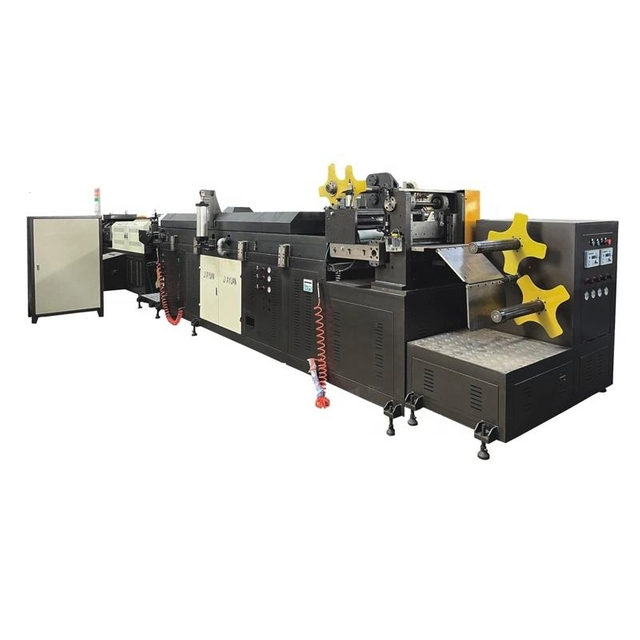
Hot melt technology eliminates carrier fluids entirely. The system uses 100% solid adhesives. Operators heat the solid blocks or pellets until they melt into a flowable liquid. The equipment applies this molten liquid to the substrate, and it cures almost instantly through rapid cooling.
The hot melt adhesive coating process allows for immediate rewinding at the end of the line. It completely removes the traditional bottleneck of drying time. By eliminating the oven phase, you can directly scale production line speed based solely on your mechanical unwinding and rewinding capabilities.
Different markets demand different performance metrics. You must evaluate how each coating technology behaves under real-world stress, extreme temperatures, and chemical exposure.
Solvent coatings traditionally win in high-heat environments. Applications like automotive under-hood labels or heavy-duty industrial tapes rely on solvent-based acrylics. These formulations resist degradation when exposed to engine oils, harsh solvents, and extreme temperature fluctuations. They form incredibly strong bonds that withstand aggressive chemical environments.
Conversely, hot melt wins in standard packaging, medical tapes, and consumer labels. In these sectors, manufacturers prioritize immediate tack and high-speed processing. Hot melt adhesives excel at forming quick bonds on corrugated boxes, low-surface-energy plastics, and breathable medical fabrics. They provide excellent flexibility and reliable holding power for everyday consumer goods.
Historically, manufacturers believed they had to sacrifice extreme durability if they abandoned solvents. Today, you can deploy a UV acrylic hot melt coating machine as a powerful hybrid solution. This technology bridges the performance gap.
UV acrylic adhesives apply as a warm liquid but cure via ultraviolet light rather than simple cooling. The UV exposure triggers a chemical cross-linking reaction within the polymer chains. This cross-linking provides hot melt adhesives with the high shear strength and heat resistance traditionally reserved for solvent-based acrylics. You achieve aerospace-grade durability without releasing volatile organic compounds into the atmosphere.
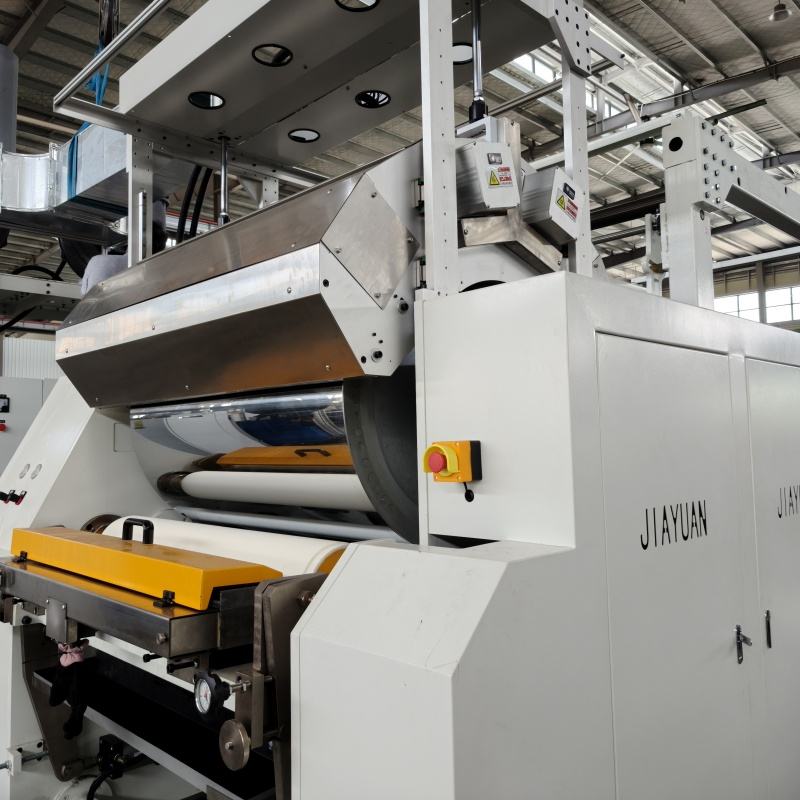
Scaling your manufacturing output requires careful management of facility space, energy grid capacity, and raw material utilization. Evaluating these factors highlights stark differences between the two methods.
Linear floor space is often a limiting factor in older manufacturing plants. Hot melt lines require minimal space. A standard configuration includes an unwind station, a slot die or roller head, a chill roll, and a rewind station. You can often fit this entire setup into a compact 30-foot zone.
Solvent lines require extensive drying tunnels. A high-speed solvent line might stretch over 100 feet to accommodate multiple heating zones. Additionally, solvent operations require massive solvent recovery systems or thermal oxidizers installed outside the building or on the roof. This expanded footprint severely limits where you can install the equipment.
The energy profiles of these two systems look fundamentally different. Hot melt systems rely on electrical resistance heating to melt the adhesive. Once the tank reaches the target temperature, maintaining that heat requires a relatively modest kilowatt-per-hour draw.
Solvent systems demand a massive natural gas or electrical draw. You must heat high volumes of air to evaporate the solvent quickly. Furthermore, running regenerative thermal oxidizers (RTOs) to destroy the VOCs consumes immense amounts of supplementary fuel. By switching to hot melt, you eliminate the highest energy-draining components of the coating process.
Material yield directly affects production efficiency. Hot melt is nearly 100% solid. Every kilogram of adhesive you put into the melt tank ends up on your substrate.
You experience zero volume loss to evaporation.
You achieve higher coated-square-meter yields per barrel of raw material.
You eliminate the logistical burden of storing and transporting heavy liquid carrier fluids.
Environmental and safety regulations heavily influence modern manufacturing strategies. Navigating these requirements demands significant operational bandwidth.
Tightening EPA and EU emission standards make solvent coating increasingly difficult to justify. Environmental agencies strictly cap Volatile Organic Compound (VOC) emissions. Operating a solvent line places a heavy compliance burden on your facility. You must continuously monitor air quality, maintain detailed emission logs, and service expensive solvent capture systems to avoid severe penalties.
Solvents introduce severe flammability hazards. Vapors can easily ignite from a stray spark or static discharge. To mitigate this, facilities must invest in Class 1 Division 1 (explosion-proof) electrical ratings. All motors, switches, and sensors must be enclosed. You must also supply massive amounts of HVAC make-up air to constantly flush vapors from the production floor.
Hot melt systems present thermal burn risks, but they eliminate explosive vapor hazards. Moving to a solvent-free hot melt coating line drastically reduces your facility safety risks. It typically eliminates the need for explosion-proof infrastructure. It also significantly lowers facility HVAC make-up air requirements, keeping your working environment safer and simpler to manage.
Integrating new technology into your production floor requires careful engineering. You must understand the specific hardware changes involved in transitioning away from legacy methods.
Solvent coatings often rely on gravure or roll coating methods. The low viscosity of solvent liquids makes them ideal for transfer via engraved cylinders. However, hot melt adhesives demand a different approach due to their higher viscosity.
The industry standard for hot melt involves high-precision slot die coating. A slot die extrudes a perfectly uniform curtain of molten adhesive directly onto the moving web. This enclosed system prevents contamination. It also provides exceptional coat weight tolerances and razor-sharp edge-control capabilities. You can lay down precise stripes or continuous films without the mess associated with open-pan roll coaters.
Many plant managers ask if they can retrofit an existing solvent line with a hot melt slot die station. While technically possible, this carries significant implementation risk. Engineering challenges abound. You must upgrade web tension controls. Un-dried, solvent-wet webs behave very differently from webs hitting a chilled cooling roll.
Maintenance realities also shift. Cleaning dried solvent from rollers requires chemical washes and extended downtime. Managing hot melt requires different protocols. Operators must routinely purge char and manage thermal degradation inside the hot melt tanks. If you leave adhesive at high temperatures for too long, it oxidizes and clogs the slot die lips.
Equipment Design Comparison
System Characteristic | Solvent Coating | Hot Melt Coating |
|---|---|---|
Primary Application Method | Gravure, Reverse Roll | Slot Die, Extrusion |
Drying/Curing Mechanism | Thermal Evaporation (Ovens) | Rapid Cooling (Chill Rolls) |
Web Tension Focus | Low tension through long ovens | High tension across chill sections |
Maintenance Priority | Vapor management, roller cleaning | Tank purging, preventing char |
When evaluating hot melt coating vs solvent coating, neither technology universally defeats the other. You must align the system's strengths with your specific market demands.
Your primary market requires military or aerospace-grade chemical resistance against aggressive fluids.
You are coating highly sensitive substrates that easily warp, shrink, or melt under high hot melt application temperatures.
You require ultra-thin, deeply penetrating coat weights (under 10 gsm) on highly porous materials like specialized filtration membranes.
You need to dramatically increase line speed and permanently eliminate oven drying bottlenecks.
You face strict environmental compliance deadlines regarding VOC emissions at your facility.
Facility floor space is at an absolute premium, and you cannot expand your building to house drying tunnels.
You want to process 100% solid materials to maximize production yield and eliminate the logistical handling of hazardous liquid carriers.
Neither technology is universally superior. The correct choice hinges entirely on the intersection of your substrate limitations, local regulatory environment, and desired production throughput. Solvent systems deliver unmatched penetration for specialized, ultra-thin applications. Conversely, hot melt systems provide unparalleled speed, environmental safety, and spatial efficiency.
The industry trajectory leans heavily toward 100% solid systems. Driven by strict ESG mandates and rising utility pressures, manufacturers continuously adopt standard and UV-curable hot melts. These advanced systems now rival legacy solvents in durability and shear strength.
Before committing to a capital purchase, recommend initiating a pilot trial. Request a comprehensive coat-weight analysis and a throughput audit from your equipment manufacturer. Testing your specific substrates on both slot die and gravure systems will reveal the exact operational reality your operators will face daily.
A: Yes, but it requires major engineering modifications. You must remove the drying ovens, install heated melt tanks, and upgrade web tension controls to handle chill rolls. Due to these complexities, investing in a new modular hot melt line is often more practical and reliable than retrofitting.
A: Yes. Thermal degradation, commonly known as charring, is a significant risk. If operators do not carefully manage tank temperatures and residence times, the adhesive oxidizes. This requires strict preventative maintenance protocols and routine system purging to prevent clogged applicator heads.
A: Practically, yes. Hot melt adhesives are nearly 100% solids. However, minor fumes can off-gas during the high-temperature melting phase. While it is not an absolutely zero-emission process, it is orders of magnitude safer and significantly lower in emissions than any solvent system.
A: Traditional EVA or rubber-based hot melts cannot match solvent durability in extreme conditions. However, UV-curable acrylic hot melts offer advanced cross-linked bonds. Once cured under UV light, these modern adhesives rival solvent-based acrylics in both chemical resistance and shear strength without environmental drawbacks.