
Views: 0 Author: Site Editor Publish Time: 2026-10-23 Origin: Site


Global label demand is surging across the logistics, retail, and packaging sectors. Yet, the production efficiency of these essential tags depends entirely on flawless hot melt coating. Melting glue is the easy part. The real challenge lies in managing the complex interactions between the adhesive, the release liner, and the face stock.
Choosing the wrong backing or substrate quickly turns a profitable run into a production nightmare. On the factory floor, this often manifests as severe adhesive bleed, poor die-cutting, or catastrophic web breaks. In this comprehensive guide, we will explore the microscopic relationship between liners and adhesives. We will also examine how substrates impact daily operations. Finally, we will highlight the critical features to look for when investing in a high-quality self-adhesive label coating machine to guarantee flawless manufacturing and protect your profit margins.
Material Synergy is Crucial: The performance of self-adhesive label coating depends heavily on the microscopic interaction between the silicone release liner and the hot melt adhesive. This relationship directly dictates peel force consistency and residual adhesion.
Substrate Sensitivity Matters: Different face stocks require precise temperature and tension controls. Failure to manage these variables leads to material degradation and uneven adhesion.
Liners Carry the Load: The release liner acts as the unsung structural hero. It carries the label web safely through high-stress mechanical processes without snapping or warping.
Equipment Dictates Quality: Investing in advanced machinery equipped with non-scratch slot dies and automatic turret rewinding is essential for maintaining high-speed, defect-free production runs.
To truly grasp the complexities of modern label manufacturing, operators must first establish a solid baseline understanding of the hot melt coating process. Over the past decade, this method has become an undisputed industry standard. Engineers prize it for its operational efficiency and remarkable material versatility.
At its core, hot melt adhesives are completely solid thermoplastic formulations. They are entirely devoid of water or chemical solvents. During a typical manufacturing shift, solid blocks or pellets are melted via targeted thermal energy. Melt tanks usually operate at temperatures between 150°C and 180°C. Once liquefied, the substance is extruded onto a moving substrate. As the adhesive hits the cooler air and web, it rapidly solidifies to create an immediate and aggressive bond.
Specifically, this technique is highly preferred for label production because it offers exceptionally high initial tack. This is a non-negotiable trait for fast-paced logistics and packaging applications. Furthermore, the process skips the evaporation phase entirely. Facilities can eliminate massive, energy-hogging drying ovens. The result is a dramatically faster curing speed, a smaller machinery footprint, and a greener production cycle boasting zero Volatile Organic Compound emissions.
The architecture of a standard self-adhesive label relies on three primary pillars working in perfect harmony. First is the adhesive, which acts as the bonding agent meticulously engineered for specific tack and shear properties. Second is the release liner. This is typically a dense glassine paper or plastic film coated with a microscopic, friction-reducing layer of silicone. Its sole purpose is to protect the adhesive until the end-user applies the label. The third pillar is the substrate or face stock. This top layer of the label receives the printed barcodes or vibrant graphics.
A standard coating line brings these three elements together in a synchronized dance. It melts the glue, precisely extrudes it onto the release liner via a coating head, and immediately laminates the printed substrate on top before the adhesive fully sets.
Material scientists often describe the interaction between the release liner and the hot melt adhesive as a performance duel. The physical and chemical dynamics occurring at this invisible interface ultimately determine the functional viability of the final product.
Peel force represents the exact amount of mechanical energy required to separate the face stock and adhesive from the release liner. Achieving the perfect peel is a notoriously delicate balancing act. The adhesive must grip the liner with enough tenacity to hold the label securely during high-speed transport and printing. Yet, it must release effortlessly when an automated applicator arm dispenses it onto a cardboard box.
This delicate equilibrium is governed by the silicone coating applied to the release liner. On a microscopic level, the silicone creates a low-surface-energy barrier. When the hot melt glue is applied, it flows and conforms to the microscopic topography of this layer. If the silicone coat weight is too sparse, the aggressive adhesive will penetrate the underlying paper fibers. This causes the label to tear abruptly upon removal. In contrast, if the coat weight is excessively heavy, the label might detach prematurely. Labels flying off during the rewinding process will cause a massive machine jam.
When the chemical profiles of the liner and the adhesive are mismatched, a disastrous adhesive clash occurs. One of the most severe manifestations of this is silicone migration. In this scenario, unbound silicone molecules from an improperly cured liner migrate directly into the hot melt adhesive layer. This invisible chemical contamination drastically kills the tackiness of the adhesive. It leads to embarrassing failures where labels simply fall off packages in transit.
To combat this, vigilant operators must continuously monitor residual adhesion. This metric tracks the percentage of tack the adhesive retains after being peeled from the liner. Preventing clashes requires engineers to fine-tune the coating weight and application temperature based specifically on the release value of the liner currently threading through the machine.
While the liner acts as the gatekeeper for release mechanics, the top layer of the label dictates the thermodynamic setup of the machine. Different face stocks present unique mechanical hurdles regarding tension parameters and maximum allowable production speeds. Operators must navigate these variables daily.
Thermal paper is the undisputed king of retail and logistics for barcode printing. However, it is notoriously temperamental when exposed to heat and friction. The chemical coating on the face stock is designed to activate and turn black instantly when subjected to targeted heat from a printhead.
During the lamination phase, the freshly applied hot melt adhesive is still radiating intense residual heat. If the lamination rollers apply too much crush pressure, or if the adhesive is applied at an excessively high temperature, the thermal paper can pre-activate. This results in dark, ugly streaks or a completely ruined, blackened web. Therefore, utilizing high-precision, non-scratch technology alongside aggressive chill rollers is mandatory. These components work in tandem to dissipate heat instantly before it has a chance to penetrate and ruin the thermal layer.
The inherent mechanical properties of the substrate heavily dictate how web tension must be managed across the line. Paper substrates are generally rigid, forgiving, and porous. They naturally absorb a small fraction of the hot melt adhesive into their fibers. Consequently, operators often need to slightly increase the coat weight to ensure a sufficient layer of adhesive remains on the surface for proper tack.
In stark contrast, synthetic films like Polyethylene Terephthalate and Polypropylene are completely non-porous and highly stretchable. Because films do not absorb a single drop of adhesive, lower coat weights are perfectly adequate. However, the tension requirements shift dramatically. If the web tension is set even slightly too high, the plastic film will elongate invisibly during lamination. Once that tension is finally released at the rewinder, the film will desperately attempt to shrink back to its original dimensions. This causes the label edges to curl upward or the entire finished roll to telescope into an unusable cone shape.
Substrate Type | Porosity & Absorption | Coat Weight Strategy | Tension Control Sensitivity | Cooling Requirement |
|---|---|---|---|---|
Paper (e.g., Glassine, Kraft) | High. Absorbs adhesive into fibers. | Requires slightly higher grams per square meter to maintain surface tack. | Moderate. Forgiving, but prone to web breaks if tension spikes suddenly. | Standard chilling is usually sufficient. |
Film (e.g., Polyethylene Terephthalate, Polypropylene) | Zero. Completely non-porous. | Lower coating weights required. Highly efficient adhesive usage. | Extremely High. Prone to stretching and telescoping if tension is too high. | Aggressive chilling required to prevent heat-induced film distortion. |
Although marketing departments focus heavily on the face stock and the adhesive strength, the release liner operates quietly as the critical structural foundation. It is the unsung carrier that transports the fragile label web safely through punishing mechanical processes without warping, tearing, or snapping.
In the violent context of rotary die-cutting, the release liner functions essentially as a hardened anvil. During this phase, a razor-sharp cylindrical die presses forcefully through the face stock and the adhesive layer. The blade must stop precisely at the microscopic surface of the silicone coating. If the liner material lacks uniform thickness or possesses insufficient internal burst strength, the entire process falls apart.
A liner that is too thin or brittle will inevitably suffer from die strikes. This is where the blade pierces the silicone layer. This microscopic breach allows the hot melt adhesive to flow down into the cut, creating a permanent mechanical bond known as blocking. When the waste matrix is stripped away, the web will tear. This forces the operator to halt the machine, re-thread the line, and discard hundreds of meters of wasted material. Consistent liner density is an absolute prerequisite for surviving high-speed die-cutting operations.
Throughout the printing and finishing stages, the release liner bears the sheer brunt of the mechanical tension of the web. Different liner materials exhibit distinct elasticity profiles. For instance, paper-based liners are relatively rigid but can tear violently under sudden tension spikes. Conversely, plastic film liners can stretch like rubber bands. This elasticity leads to disastrous color registration errors during multi-color printing.
Advanced machinery must actively compensate for these unpredictable material variables. Modern systems utilize closed-loop tension control mechanisms. By incorporating precision load cells and pneumatic brakes, the equipment isolates specific tension zones. This guarantees that the liner carries the heavy label roll through the printing press and rewinder without undergoing plastic deformation.
To successfully navigate complex material interactions, operators require seriously robust hardware. Investing in industrial-grade machinery equipped with specific technological advancements is the most reliable method for mitigating material-induced defects. When evaluating label coating and laminating equipment, you must look for features that ensure precision and high throughput.
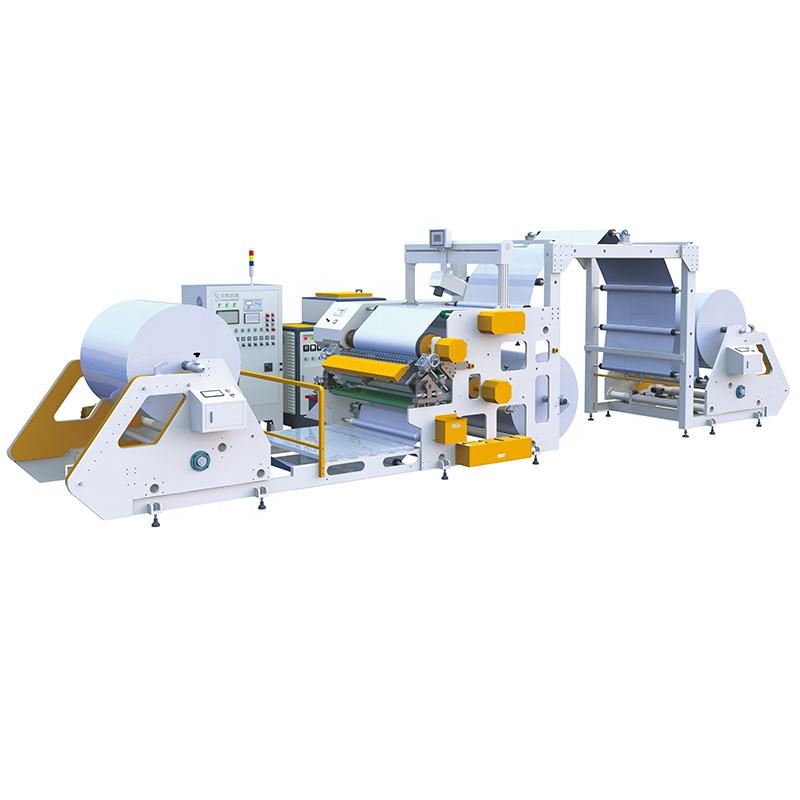
The application head is widely considered the beating heart of the coating process. Traditional roll coating methods often expose the hot adhesive to ambient air, leading to rapid oxidation and uneven application. Modern equipment utilizes non-scratch slot die technology instead. A slot die is a closed, pressurized extrusion system that forces the molten adhesive through a microscopic, precision-machined gap directly onto the moving web.
High-speed, non-scratch coating heads are engineered to deliver a perfectly smooth, uniform adhesive layer. Top-tier machines can maintain a coating weight accuracy of ±1 gram per square meter. This is particularly crucial when processing sensitive substrates like thermal paper or ultra-clear films, where adhesive streaks would be glaringly visible. The non-scratch design maintains a micro-clearance above the web, preventing physical friction from damaging delicate liners.
In high-volume label production, continuous operation is the ultimate metric for operational efficiency. Stopping a coating line just to remove a finished roll and attach a new cardboard core introduces severe inefficiencies. It disrupts the delicate thermal equilibrium of the melt tank. It also causes sudden tension fluctuations across the web, inevitably leading to material waste.
Implementing an automated hot melt label coating machine equipped with a turret rewind system resolves this frustrating bottleneck. A turret rewinder features multiple expanding shafts. As one roll reaches its maximum diameter, the turret rotates, automatically slices the moving web, and splices it onto a fresh core at full production speed. Advanced machines can execute non-stop splicing at speeds up to 150 to 200 meters per minute. This continuous operation drastically reduces the scrap rate associated with machine stops and starts.
Hot melt adhesives are typically applied at scorching temperatures. If the adhesive is not adequately and immediately cooled before the web is rewound, the accumulated thermal mass inside the finished roll will cause the glue to remain in a semi-liquid state.
Under the immense radial pressure of a tightly wound roll, this uncooled adhesive will migrate laterally. It bleeds out of the edges of the roll in a sticky mess. Properly engineered chilling systems utilize large-diameter, double-jacketed steel rollers with internal, high-flow water circulation. These chill rollers rapidly extract heat from the web immediately after lamination. Dropping the adhesive temperature below its softening point instantly solidifies the matrix, ensuring clean, usable label rolls.
Even with premium substrates and top-tier adhesives, production anomalies will occasionally rear their ugly heads. Applying a systematic, empirical approach to troubleshooting is essential for minimizing downtime. Below is an analysis of common defects and the standard corrective actions required on the factory floor.
Adhesive bleeding is a frequent and messy issue where glue extrudes beyond the edges of the label or the roll, contaminating everything it touches.
The root cause of this defect is typically driven by a combination of excessive coating weight, inadequate cooling, or rewind tension that is set far too high. High tension effectively squeezes the warm adhesive outward like toothpaste from a tube. To fix this, operators must first verify the coat weight using continuous inline measurement sensors. If the weight is within specification, the focus should shift to the machine parameters. Increasing the coolant flow rate in the chill rollers and slightly reducing the taper tension on the rewinder will typically resolve the oozing immediately.
Streaking manifests as longitudinal lines or gaps of varying adhesive thickness. This seriously compromises both the visual aesthetics and the peel performance of the label.
This is almost exclusively a fluid dynamics or contamination issue. Degraded, cross-linked adhesive can partially block the microscopic slot die opening. Alternatively, low surface energy on the substrate can prevent the adhesive from wetting out evenly. Operators should implement a strict maintenance schedule for the melt tank and inline filtration systems to prevent charred particles from reaching the die. Additionally, utilizing an inline corona treater immediately before lamination can significantly improve adhesive wet-out.
A web break is a catastrophic failure that immediately halts production. It requires a time-consuming and frustrating re-threading of the entire machine.
This is a mechanical failure usually caused by mismatched machine tension settings relative to the specific tensile strength of the release liner. It can also occur if the die-cutting anvil is applying excessive crush pressure. The ultimate corrective action is to upgrade to automated, closed-loop tension control systems that utilize Proportional-Integral-Derivative controllers. These systems detect microscopic tension variations via load cells and adjust servo motors in milliseconds, preventing the fragile web from ever reaching its breaking point.
The label manufacturing sector is currently undergoing a massive transformation. Market analysis and recent industry developments indicate a strong shift driven by sustainability mandates and the need for extreme operational efficiency. Understanding these trajectory shifts is vital for manufacturers planning long-term capital investments.
One of the most prominent trends is the rapid transition toward ultra-thin, sustainable release liners. Converters are facing immense pressure to reduce their carbon footprint and logistics costs. Consequently, there is an industry-wide push to replace traditional 60-micron glassine paper liners with ultra-thin plastic film liners. Some of these new materials measure as low as 12 to 19 microns. These thinner liners dramatically reduce shipping weight and decrease the volume of waste sent to landfills. More importantly, they allow significantly more labels to be wound onto a single roll, thereby reducing machine changeover frequencies.
However, processing these ultra-thin materials introduces severe mechanical challenges. Older coating machines simply lack the delicate sensitivity required to handle such fragile webs. Next-generation coating lines are adapting by incorporating ultra-low friction idler rollers, precise servo-driven tension zones, and highly sensitive dancer assemblies capable of maintaining tension tolerances within a fraction of a Newton.
Furthermore, the integration of smart automation and Internet of Things connectivity is transforming label coating from an operator-dependent craft into a precise, data-driven science. Modern lines are equipped with real-time coat weight monitoring systems utilizing infrared sensors. These sensors provide closed-loop feedback directly to the slot die and the adhesive delivery pumps. They automatically adjust the adhesive flow rate to maintain perfectly consistent coat weights without any human intervention.
Successful self-adhesive label production is a masterclass in managing the complex, microscopic relationships between hot melt adhesives, silicone release liners, and diverse face stock substrates. While meticulous material selection is absolutely critical for ensuring product quality, the ultimate deciding factor in your daily production efficiency is the capability of your machinery.
Relying on outdated equipment to process modern, highly sensitive materials will inevitably lead to high scrap rates and frustrating bottlenecks. To stay competitive in today's fast-paced market, manufacturers must upgrade their production lines. Investing in state-of-the-art machinery designed for high-speed, non-scratch, and automated precision will safeguard your margins and elevate your product quality. If you are struggling with web breaks, adhesive bleed, or slow changeovers, it is time to evaluate your hardware. Explore the high-performance solutions available at Jy-well and find the perfect coating equipment tailored to your specific operational needs to ensure flawless label manufacturing.
The primary difference lies in the adhesive chemistry and the required curing mechanism. Hot melt machines utilize entirely solid adhesives that are liquefied via thermal energy and cure instantly upon cooling. This process offers significantly faster production speeds, a much smaller factory footprint, and notable eco-friendly benefits. In contrast, solvent-based machines require massive, energy-intensive thermal drying ovens to evaporate the chemical solvents, which slows down production and requires strict environmental compliance measures.
Liner selection is dictated by the specific hot melt adhesive tackiness and the mechanical demands of your downstream processes. Glassine paper is the reliable industry standard for general-purpose applications due to its excellent die-cutting properties and cost-effectiveness. However, if your production involves ultra-high-speed automated dispensing, clear no-label look applications, or wet environments, plastic film liners are vastly superior due to their high tensile strength and flawless, smooth surface profile.
The ideal coating weight typically ranges between 15 and 25 grams per square meter, depending entirely on the substrate and the end-use application. Smooth, non-porous film substrates require lower coating weights, often around 15 to 18 grams per square meter. Rough or highly porous paper substrates require heavier coating weights, closer to 20 to 25 grams per square meter, to ensure enough adhesive remains on the surface to provide adequate initial tack.
Yes, provided the equipment is engineered with the necessary versatility. Modern coating lines feature highly adjustable, multi-zone tension controls and precise thermal management systems. This allows operators to seamlessly switch between rigid, thermally sensitive materials like thermal paper, and highly stretchable synthetic substrates like clear films, all without causing web distortion or thermal damage.
Preventing silicone migration requires strict quality control of your release liners and precise temperature management at the coating head. You must ensure that the silicone on the liner is fully cured by the supplier before use. During production, applying the hot melt adhesive at excessively high temperatures can re-activate or degrade the silicone layer, causing it to transfer into the adhesive. Calibrating your melt tank and slot die temperatures to match the adhesive specifications is critical to preventing this chemical contamination.
Edge bleed is fundamentally a thermodynamic and mechanical issue. It is typically caused by applying an excessive volume of adhesive, inadequate chilling of the web before it reaches the rewinder, or excessive rewind tension. If the adhesive is still warm and soft when wound, the intense radial pressure of the roll will physically squeeze the adhesive out of the sides. Optimizing chill roll temperatures and reducing taper tension usually resolves this messy issue immediately.
A turret rewind is an advanced, automated material handling system located at the end of the coating line. Instead of requiring the operator to stop the machine to remove a finished roll and attach a new core, the turret mechanism rotates a new core into position. It automatically cuts the moving web and splices it onto the new core on the fly. This drastically increases production throughput, minimizes material waste, and maintains stable thermal and tension dynamics across the entire line.


